Friday, February 28, 2014

1929 - The Year in Review

Even though 1929 saw The Marx Brothers making their film debut, Hitchcock arriving with his breakthrough works (doing both a silent and an inventive sound version of a single, thrilling tale), and arguably the brightest period for G.W. Pabst and his newly-minted muse, the indelible Louise Brooks (working together this year on two very divergent stories), this was a no-contest year for me. Dziga Vertov's undyingly lively travelogue is a marvelous amalgamation of impressive imagery and, most importantly, rhythmic editing, all working in concert to craft a singular view of daily Soviet life (and, in a mindbending twist, the making of the film itself). I've always liked to say that Vertov's movie is limber enough to be transformed by whatever music you chose to play along with it (heck, I even watched it once with Simon and Garfunkel backing it, and it still worked). To this day, it feels as if its nearly a century before its time, mainly because few feature filmmakers have dared to follow its remarkable lead (though the advent of MTV unknowingly underlined its influence). As for the shorts, Disney (and Ub Iwerks) win their first, and Dudley Murphy's dreamy quasi-doc starring Duke Ellington and the Cotton Club crew beats out the estimable Laurel and Hardy. But the bowler boys will have their day soon. NOTE: These are MY choices for each category, and are in no way reflective of the choices made by the Oscars.

PICTURE: MAN WITH A MOVIE CAMERA (Dziga Vertov, USSR), followed by: Pandora’s Box (G.W. Pabst, Germany), Blackmail (Alfred Hitchcock, UK (sound version)), Diary of a Lost Girl (G.W. Pabst, Germany), The Love Parade (Ernst Lubitsch, US), Oueen Kelly (US, Erich Von Stroheim), Hallelujah! (King Vidor, US), The Cocoanuts (Robert Florey and Joseph Santley, US), Disraeli (Alfred E. Green, US)

ACTOR: George Arliss, DISRAELI (2nd: Erich Von Stroheim, The Great Gabbo, followed by:  Ronald Colman, Bulldog Drummond; Maurice Chevalier, The Love Parade)

ACTRESS: Louise Brooks, PANDORA'S BOX (2nd: Gloria Swanson, Queen Kelly, followed by:  Louise Brooks, Diary of a Lost Girl; Mary Pickford, Coquette; Helen Morgan, Applause)

DIRECTOR: Dziga Vertov, MAN WITH A MOVIE CAMERA (2nd: G.W. Pabst, Pandora's Box, followed by: G.W. Pabst, Diary of a Lost Girl; Alfred Hitchcock, Blackmail (sound version); King Vidor, Hallelujah!; Ernst Lubitsch, The Love Parade)


SHORT FILM (ANIMATED): THE SKELETON DANCE (US…Ub Iwerks, Walt Disney) (2nd: The Barnyard Battle (US…Ub Iwerks, Walt Disney), followed by: Tusalava (UK…Len Lye), Haunted House (US…Walt Disney))


SHORT FILM (LIVE ACTION): BLACK AND TAN (UK, Dudley Murphy) (2nd: Big Business (US, James W. Horne), followed by: H2O (UK, Ralph Steiner), You’re Darn Tootin! (US, Edgar Kennedy))

SCREENPLAY: Alfred Hitchcock and Benn Levy, BLACKMAIL (2nd: Ernest Vajda and Guy Bolton, The Love Parade, followed by: Ladislaus Vajda and Joseph Fleisler, Pandora's Box; Julien Josephson, Disraeli; Wanda Tuchock, Richard Schayer, King Vidor, Ransom Rideout, and Miriam Ainslee, Hallelujah!, Morrie Ryskind, The Cocoanuts)

CINEMATOGRAPHY: Mikhail Kaufman, MAN WITH A MOVIE CAMERA (2nd: Gunther Kramph, Pandora's Box; Paul Ivano and Gordon Pollock, Queen Kelly


ART DIRECTION: QUEEN KELLY, The Broadway Melody, Disraeli

COSTUME DESIGN: QUEEN KELLY, Pandora's Box, The Broadway Melody

FILM EDITING: MAN WITH A MOVIE CAMERA, Pandora's Box, Blackmail

VISUAL EFFECTS: MAN WITH A MOVIE CAMERA

MAKEUP: DISRAELI

Saturday, February 22, 2014

1928 - The Year in Review

Two incomparable comedies from Buster Keaton. A progenitor of the modern action film from Fritz Lang. A harsh, dreamy delve into big city reality from King Vidor. A lush and personal epic from Erich Von Stroheim. And the one American silent from Swedish director Victor Sjostrom, who promptly disavowed Hollywood and hightailed it back to Stockholm (where he continued to make films and, decades later, agreed to star in Ingmar Bergman's Wild Strawberries). Yet, even amongst all this greatness, nothing could withstand the withering onslaught of emotion that Carl Theodore Dreyer offered, with a film consisting almost entirely of close-ups, while working from the transcripts of Jeanne D'Arc's kangaroo court. With Renee Maria Falconetti delivering not just the most devastating screen performance of this year, but arguably of all time--well, there was just nothing that could come near it (Falconetti, alone, makes you feel as if you are an eyewitness to injustice; she never acted in movies again). The short films, too, were overwhelmed by fineries from other shores; though Laurel and Hardy and Mickey Mouse made their marks, the otherworldly images from Bunuel and Dali are, rightfully, still being dissected today. 


PICTURE: THE PASSION OF JEANNE D'ARC (Carl Th. Dreyer, France)
2nd: The Crowd (King Vidor, US), followed by:
The Wedding March (Erich Von Stroheim, US)
Steamboat Bill Jr. (Buster Keaton, US)
Spione (Fritz Lang, Germany)
The Wind (Victor Sjostrom, US)
The Circus (Charles Chaplin, US)
October (Sergei Eisenstein, USSR)

ACTOR: James Murray, THE CROWD (2nd: Erich Von Stroheim, The Wedding March, followed by: Lon Chaney, Laugh Clown Laugh; Buster Keaton Steamboat Bill Jr.; Charles Chaplin, The Circus; Emil Jannings The Last Command)

ACTRESS: Renee Maria Falconetti, THE PASSION OF JEANNE D'ARC (2nd: Eleanor Boardman, The Crowd, followed by: Lillian Gish, The Wind; Marion Davies, Show People) 

DIRECTOR: Carl Th. Dreyer, THE PASSION OF JEANNE D'ARC (2nd: King Vidor, The Crowd, followed by: Buster Keaton, Steamboat Bill Jr.; Victor Sjostrom, The Wind; Fritz Lang, Spione; Erich Von Stroheim, The Wedding March; Sergei Eisenstein, October

SHORT FILM: UN CHIEN ANDELOU (Luis Buñuel and Salvador Dali, France)
(2nd: Steamboat Willie (Ub Iwerks and Walt Disney, US), followed by:
Leave ‘Em Laughing (Clyde Bruckman, US)
Ko-ko’s Earth Control (Max and Dave Fleischer, US)
The Finishing Touch (George Stevens, US)
Ghosts Before Breakfast (Hans Richter, Germany))


SCREENPLAY: King Vidor, John V.A. Weaver and Joe Farnham, THE CROWD (2nd: Thea Von Harbou and Fritz Lang, Spione, followed by: Clyde Bruckman, Lew Lipton and Joe Farnham, The Cameraman; Harry Carr and Erich Von Stroheim, The Wedding March; Joseph Delteil and Carl Th. Dreyer, The Passion of Jeanne D'Arc)

CINEMATOGRAPHY: Rudolph Mate, THE PASSION OF JEANNE D'ARC (2nd: Roy H. Klaffki and Ray Rennahan, The Wedding March, followed by: Henry Sharp, The Crowd; John Arnold, The Wind)


ART DIRECTION: SPIONE, The Wedding March, The Crowd,

COSTUME DESIGN: THE WEDDING MARCH, The Wind

FILM EDITING: SPIONE, The Passion of Jeanne D'Arc, The Crowd, October, Steamboat Bill Jr.

VISUAL EFFECTS:
SPIONE, The Wind, Steamboat Bill Jr. 


MAKEUP: LAUGH CLOWN LAUGH, The Passion of Jeanne D'Arc

Saturday, February 15, 2014

1927 - The Year in Review

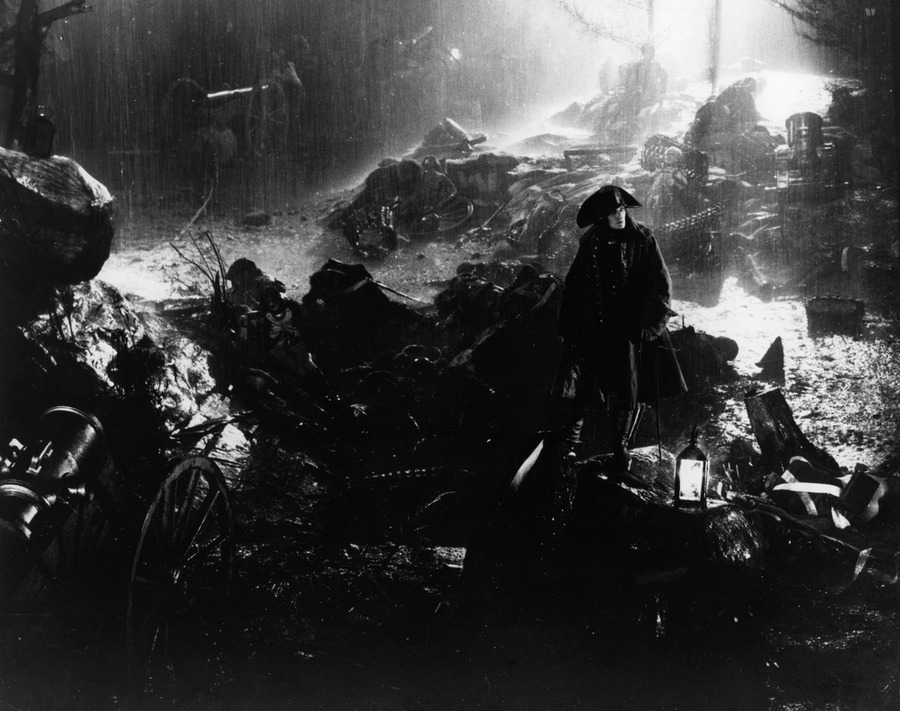
For the debut year of the Academy Awards, and of the advent of sound motion pictures, I found little in common with both. Abel Gance's resilient and astounding silent biopic didn't make it to American shores until much later, and in a truncated form. (We wouldn't see the fullest version of the film until Kevin Brownlow reconstructed it, and Francis Coppola backed it, in the early 1980s; I saw it in 1981 Atlanta at the Fox Theater, with Carmine Coppola conducting his score for the orchestra. This remarkable vision changed my life, and I haven't seen the film since.)  Its future digital release is caught up in a never-ending standoff between Brownlow, who wants to scrap Carmine Coppola's score and add some more footage into the piece, and Francis Coppola, who's understandably adamant about keeping his father's brilliant score intact (here's an obvious solution: release both versions). So, apparently, Gance's epic will be my perennial #1 choice for THE movie that should immediately be released on Blu-Ray. Finally, the now-popular silent sci-fi epic from Fritz Lang was completely ignored by Hollywood (maybe they didn't see this in time as well). Luckily, three Hollywood masterpieces got the notices they deserved--though the Academy anointed the wrong one (Wellman's still exciting Wings) as their first winner--a sign of things to come. NOTE: These are MY choices for each category, and are in no way reflective of the choices made by the Oscars.

PICTURE: NAPOLEON (France, Abel Gance)
2nd: Metropolis (Germany, Fritz Lang), followed by:
Sunrise, A Song of Two Humans (US, F.W. Murnau)
7th Heaven (US, Frank Borzage)
Wings (US, William Wellman)
It (US, Clarence Badger)
The King of Kings (US, Cecil B. DeMille)
College (US, James W. Horne)
The Jazz Singer (US, Alan Crosland)
Berlin--Symphony of a Great City (Germany, Walter Ruttman)


DIRECTOR: Abel Gance, NAPOLEON (2nd: Fritz Lang, Metropolis, followed by: F.W. Murnau, Sunrise; Frank Borzage, 7th Heaven; William Wellman, Wings))

ACTOR: Albert Dieudonné, NAPOLEON (2nd: Rudolf Klein-Rogge, Metropolis, followed by: Buster Keaton, College; Harold Lloyd, The Kid Brother; H.B. Warner, King of Kings; Al Jolson, The Jazz Singer; Charles Farrell, 7th Heaven)

ACTRESS: Janet Gaynor, SUNRISE (2nd: Clara Bow It, followed by: Janet Gaynor, 7th Heaven; Brigitte Helm Metropolis) 


DIRECTOR: Abel Gance, NAPOLEON (2nd: Fritz Lang, Metropolis, followed by: F.W. Murnau, Sunrise; Frank Borzage, 7th Heaven; William Wellman, Wings)) 


SHORT FILM: THE LIFE AND DEATH OF 9713, A HOLLYWOOD EXTRA (US, Robert Florey, Slavko Vorkapich) (2nd: The Battle of the Century (US, Clyde Bruckman), followed by: Invitation to a Journey (France, Germaine Dulac); 24 Dollar Island (US, Robert J. Flaherty); Marche des Machines (France, Eugene Deslaw))


SCREENPLAY: Carl Meyer, Herbert Sudermann, Katherine Hilliker, H.H. Caldwell, SUNRISE (2nd: Abel Gance, Napoleon; Thea Von Harbou, Metropolis; Benjamin Glazer, Katherine Hilliker, H.H. Caldwell, 7th Heaven; Elinor Glyn, Hope Loring, Louis D. Lighton, George Marion Jr., It)

CINEMATOGRAPHY: Léonce-Henri Burel, Jules Kruger, Jean-Paul Mundviller and Nikolai Toporkoff, NAPOLEON (2nd: Charles Rosher and Karl Struss, Sunrise, followed by: Karl Freund, Günther Rittau and Walter Ruttmann, Metropolis; Ernest Palmer and Joseph H. Valentine, 7th Heaven; J. Peverell Marley, The King of Kings

ART DIRECTION: METROPOLIS, Napoleon, Sunrise, The King of Kings, Casanova 

COSTUME DESIGN: NAPOLEON, Metropolis, Sunrise, It, The King of Kings

FILM EDITING: NAPOLEON, Metropolis, Sunrise, Wings, 7th Heaven 


SOUND: THE JAZZ SINGER


VISUAL EFFECTS: METROPOLIS, Napoleon, Sunrise, Wings 

MAKEUP: METROPOLIS, King of Kings, The Jazz Singer