Showing posts with label images. Show all posts

Saturday, January 9, 2016

1972--The Year in Review

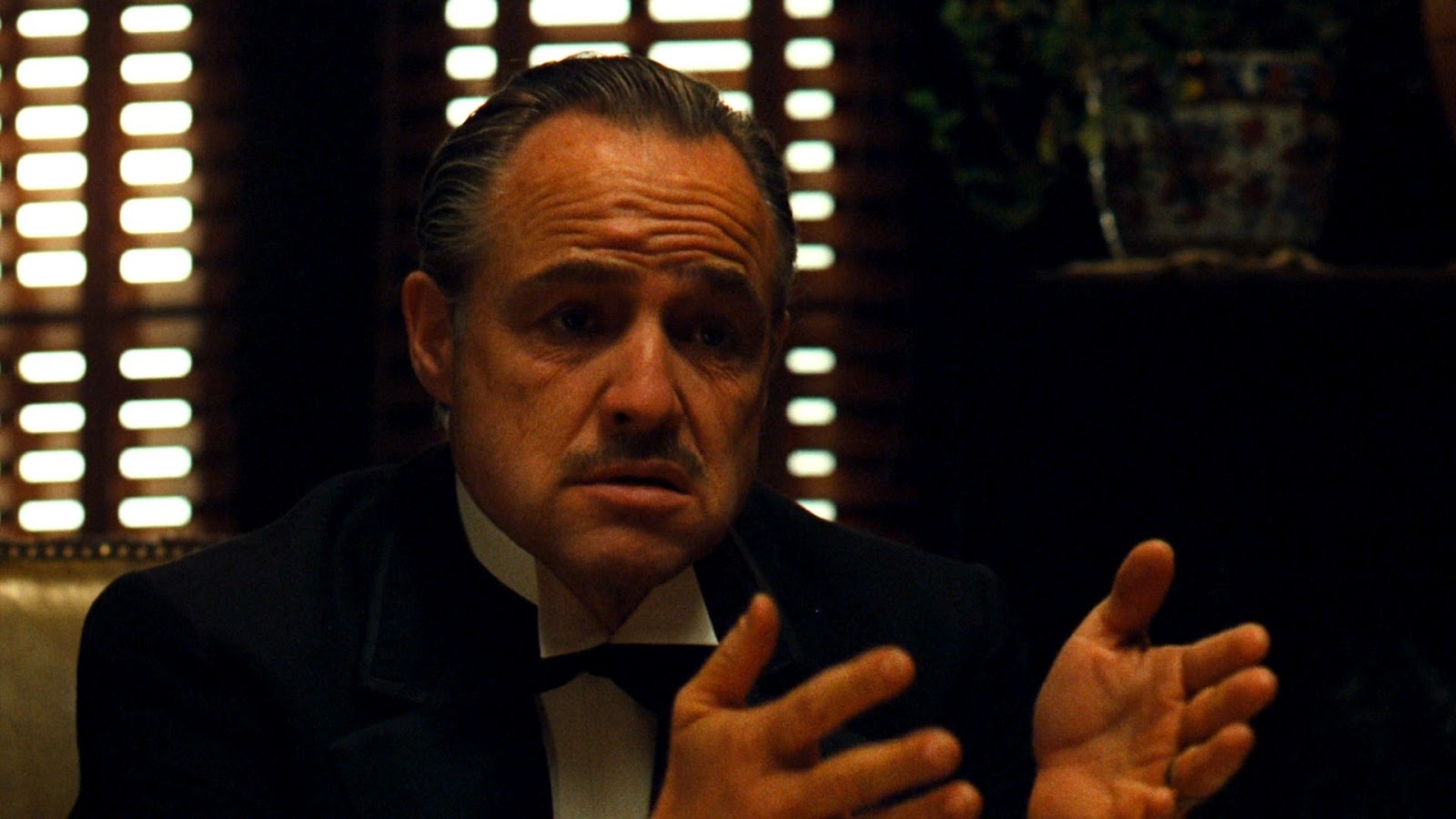
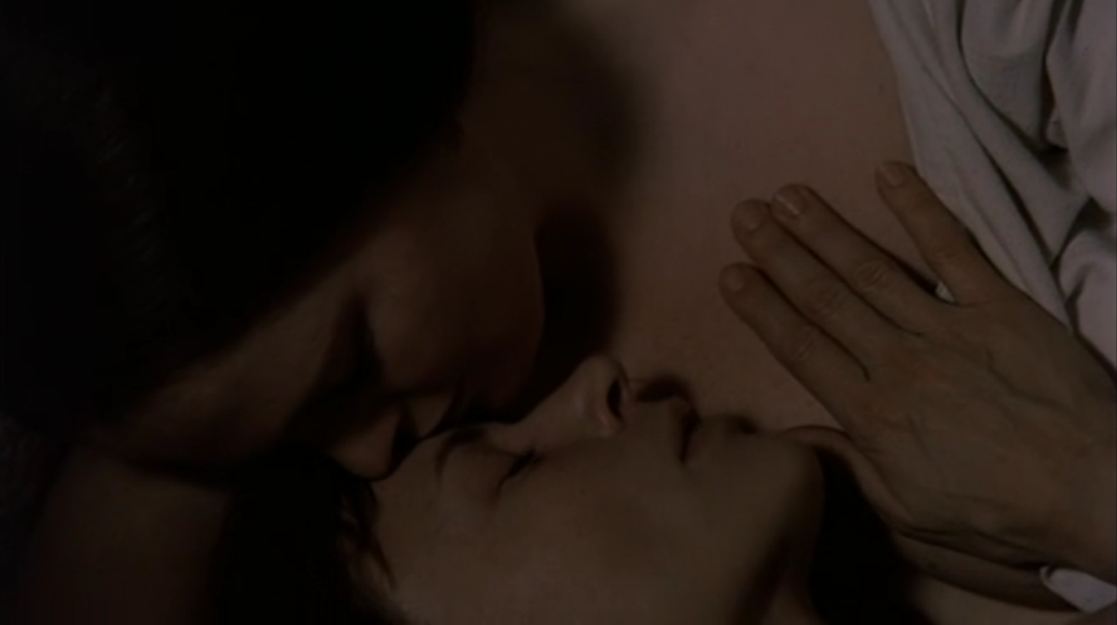
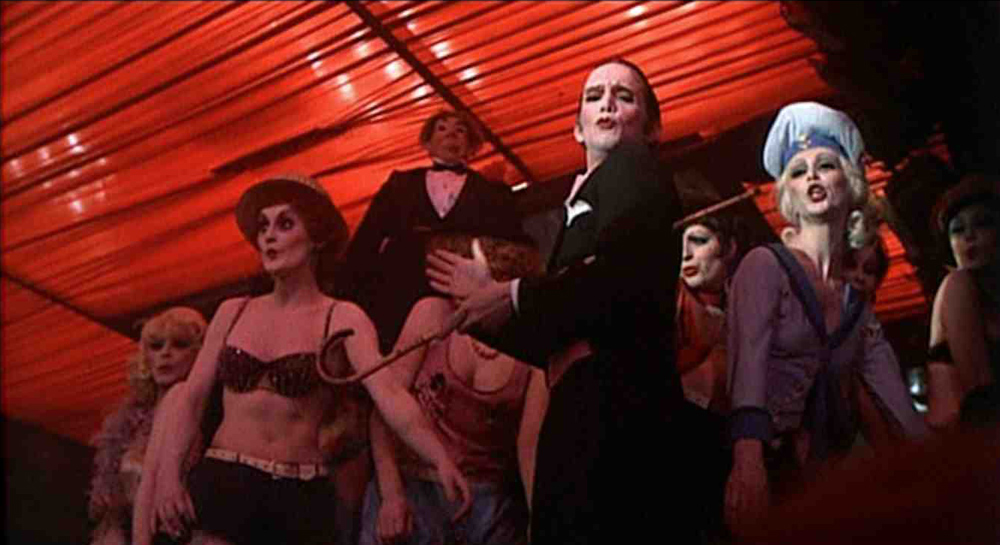
This one was WAY easy, even though its competitors were imposingly large. But how could it go any other direction? By the way, I see Brando’s Vito Corleone as a supporting performance, so I voted as such (and this allowed me to give Klaus Kinski his due). I feel sorry that Bergman’s resilient Cries and Whispers didn’t fare better in my ballot, though; but, really, are we to give this greatest of filmmakers the top prize each and every year? Incidentally, my tie vote for supporting actress is only my fifth tie in all of the ballots I’ve put forth. I just could not choose between Ms. Winters (who, with her physicality and voice, makes me laugh and cry every time I see The Poseidon Adventure) and Ms. Berlin (who manages to make an irritating character also undeniably lovable and, with her final scene, pitiable). And now I confess: The Poseidon Adventure is defiantly one of my favorites, as a child and as an adult; it may seem cheesy, but I love it, and I think it has a profoundly moral undercurrent to it, so I encourage you all to check it out again, because it’s terrifically entertaining, strongly crafted on all levels, but it also has a mean religious umph. I confess also to a special connection with Robert Altman's Images, a totally forgotten masterpiece of psychological horror that needs to be rediscovered by all genre fans (and I could not give the top award to Liza Minnelli--as great as she is--with Susannah York's descent into madness right there in front)! As for the short films, Chantal Ackerman's epic 360-degree pan bests the likes of Eames, Brakhage, and Anger, while Japan's Oni remains a major jawdropper in the realm of stop-motion animation. NOTE: These are MY choices for each category, and are only occasionally reflective of the selections made by the Academy of Motion Picture Arts and Sciences (aka The Oscars). When available, the nominee that actually won the Oscar will be highlighted in bold. 


PICTURE: THE GODFATHER (US, Francis Ford Coppola)
(2nd: Cabaret (US, Bob Fosse)
followed by: Cries and Whispers (Sweden, Ingmar Bergman)
Deliverance (US, John Boorman)
Aguirre, The Wrath of God (West Germany, Werner Herzog)
Solaris (USSR, Andrei Tarkovsky)
The Discreet Charm of the Bourgeoisie (France, Luis Buñuel)
Images (Ireland/US, Robert Altman)
Last Tango in Paris (France, Bernardo Bertolucci)
What’s Up, Doc? (US, Peter Bogdanovich)
The Candidate (US, Michael Ritchie)
The Poseidon Adventure (US, Ronald Neame)
The Heartbreak Kid (US, Elaine May)
Tomorrow (US, Joseph Anthony)
Sleuth (UK, Joseph L. Mankiewicz)
Bad Company (US, Robert Benton)
Slaughterhouse-Five (US, George Roy Hill)
Marjoe (US, Sarah Kernochan and Howard Smith)
The Other (US, Robert Mulligan)
Frenzy (UK, Alfred Hitchcock)
The Harder They Come (Jamaica, Perry Henzell)
Fat City (US, John Huston)
The King of Marvin Gardens (US, Bob Rafelson)
Play It Again, Sam (US, Herbert Ross)
State of Siege (France, Costa-Gavras)
Chloe in the Afternoon (France, Eric Rohmer)
Prime Cut (US, Michael Ritchie)
Pink Flamingos (US, John Waters)
Sounder (US, Martin Ritt)
Malcolm X (US, Arnold Perl and Melvin Worth)
The Ruling Class (UK, Peter Medak)
Hickey and Boggs (US, Robert Culp)
Super Fly (US, Gordon Parks)
Across 110th Street (US, Barry Shear)
The New Land (Sweden, Jan Troell)
Cisco Pike (US, Bill L. Norton)
Pocket Money (US, Stuart Rosenberg)
Elvis on Tour (US, Pierre Adidge and Robert Abel)
Tales from the Crypt (UK, Freddie Francis)
The Cowboys (US, Mark Rydell)
Manson (US, Robert Henderson and Lawrence Merrick)
Lady Sings the Blues (US, Sidney J. Furie)
The Effect of Gamma Rays on Man-in-the-Moon Marigolds (US, Paul Newman)
The New Centurions (US, Richard Fleischer)
Ulzana’s Raid (US, Robert Aldrich)
The Bitter Tears of Petra Von Kant (West Germany, Rainer Werner Fassbinder)
Junior Bonner (US, Sam Peckinpah)
Everything You Always Wanted to Know About Sex (But Were Afraid to Ask) (US, Woody Allen)
Pete 'n' Tillie (US, Martin Ritt)
Ludwig (Italy, Luchino Visconti)
The Getaway (US, Sam Peckinpah)
The Offence (UK, Sidney Lumet)
The Seduction of Mimi (Italy, Lina Wertmuller)
Fellini Roma (Italy, Federico Fellini)
Jeremiah Johnson (US, Sydney Pollack)
Boxcar Bertha (US, Martin Scorsese)
The Hot Rock (US, Peter Yates)
Fillmore (US, Richard T. Heffron)
Young Winston (UK, Richard Attenborough)
1776 (US, Peter Hunt)
La Vallée (France, Barbet Schroeder)
Dr. Phibes Rises Again (UK, Robert Fuest)
Snoopy Come Home (US, Bill Melendez)
The Mechanic (US, Michael Winner)
The Big Bird Cage (US, Jack Hill)
Kansas City Bomber (US, Jerrold Freedman)
The War Between Men and Women (US, Melville Shavelson)
Last House on the Left (US, Wes Craven)
Deep Throat (US, Gerard Damiano))


ACTOR:  Klaus Kinski, AGUIRRE, THE WRATH OF GOD (2nd: Marlon Brando, Last Tango in Paris, followed by: Al Pacino, The Godfather; Robert Duvall, Tomorrow; Woody Allen, Play It Again, Sam; Peter O’Toole, The Ruling Class; Charles Grodin, The Heartbreak Kid; Michael Caine, Sleuth; Laurence Olivier, Sleuth; Robert Redford, The Candidate)


ACTRESS: Susannah York, IMAGES (2nd: Liza Minnelli, Cabaret, followed by: Liv Ullmann, Cries and Whispers; Diana Ross, Lady Sings the Blues; Ingrid Thulin, Cries and Whispers; Barbra Streisand, What’s Up, Doc?; Cicely Tyson, Sounder; Olga Bellin, Tomorrow; Joanne Woodward, The Effect of Gamma-Rays on Man-in-the-Moon Marigolds)

SUPPORTING ACTOR: Marlon Brando, THE GODFATHER (won as Best Actor) (2nd: Joel Grey, Cabaret, followed by: Ned Beatty, Deliverance; Robert Duvall, The Godfather; James Caan, The Godfather; Eddie Albert, The Heartbreak Kid; Burt Reynolds, Deliverance; David Lochary, Pink Flamingos; Peter Cushing, Tales From the Crypt; Bruce Dern, The Cowboys) 


SUPPORTING ACTRESS: (TIE) Jeanne Berlin, THE HEARTBREAK KID and Shelley Winters, THE POSEIDON ADVENTURE (2nd: Harriet Andersson, Cries and Whispers, followed by: Diane Keaton, Play It Again, Sam; Madeline Kahn, What’s Up, Doc?; Susan Tyrell, Fat City; Valerie Perrine, Slaughterhouse-Five; Diane Keaton, The Godfather; Eileen Heckart, Butterflies Are Free)

DIRECTOR: Francis Ford Coppola, THE GODFATHER (2nd: Bob Fosse, Cabaret, followed by: Ingmar Bergman, Cries and Whispers; Werner Herzog, Aguirre, The Wrath of God; Andrei Tarkovsky, Solaris; John Boorman, Deliverance; Bernardo Bertolucci, Last Tango in Paris; Luis Bunuel, The Discreet Charm of the Bourgeoisie; Robert Altman, Images; George Roy Hill, Slaughterhouse-Five)


NON-ENGLISH-LANGUAGE FILM: CRIES AND WHISPERS (Sweden, Ingmar Bergman) (2nd: Aguirre, The Wrath of God (West Germany, Werner Herzog), followed by: Solaris (USSR, Andrei Tarkovsky); The Discreet Charm of the Bourgeoisie (France, Luis Buñuel); State of Siege (France, Costa-Gavras); Chloe in the Afternoon (France, Eric Rohmer); The New Land (Sweden, Jan Troell); The Bitter Tears of Petra Von Kant (West Germany, Rainer Werner Fassbinder); Ludwig (Italy, Luchino Visconti); The Seduction of Mimi (Italy, Lina Wertmuller))


DOCUMENTARY FEATURE: MARJOE (Howard Smith and Sarah Kernochan) (2nd: Malcolm X (Arnold Perl and Melvin Worth), followed by: Manson (Robert Henderson and Lawrence Merrick); Elvis on Tour (Pierre Adidge and Robert Abel); Fillmore (Richard T. Heffron))

ORIGINAL SCREENPLAY: Ingmar Bergman, CRIES AND WHISPERS (2nd: Luis Bunuel and Jean-Claude Carriere, The Discreet Charm of the Bourgeoisie, followed by: Jeremy Larner, The Candidate; Werner Herzog, Aguirre, The Wrath of God; Peter Bogdanovich, Buck Henry, David Newman and Robert Benton, What’s Up, Doc?)


ADAPTED SCREENPLAY:  Francis Ford Coppola and Mario Puzo, THE GODFATHER (2nd: Jay Presson Allen, Cabaret, followed by: Neil Simon, The Heartbreak Kid; James Dickey, Deliverance; Horton Foote, Tomorrow)


LIVE ACTION SHORT FILM: LA CHAMBRE (Belgium, Chantal Akerman) (2nd: Design Q & A (US, Charles and Ray Eames), followed by: OffOn (US, Scott Bartlett); Lucifer Rising (US, Kenneth Anger); The Process (US, Stan Brakhage))


ANIMATED SHORT FILM: ONI (Japan, Kihachiro Kawamoto) (2nd: Leonardo’s Diary (Czechoslovakia, Jan Svankmajer), followed by: Matrix III (US, John Whitney); Kama Sutra Rides Again (UK, Bob Godfrey); Our Lady of the Sphere (US, Larry Jordan))


CINEMATOGRAPHY: Gordon Willis, THE GODFATHER (2nd: Sven Nykvist, Cries and Whispers, followed by: Vittorio Storaro, Last Tango in Paris; Geoffrey Unsworth, Cabaret; Vilmos Zsigmond, Deliverance) 


ART DIRECTION: CABARET, The Godfather, The Poseidon Adventure, Cries and Whispers, Sleuth


COSTUME DESIGN: CABARET, The Godfather, Cries and Whispers, Ludwig, Lady Sings the Blues

FILM EDITING: THE GODFATHER, Cabaret, Deliverance, The Candidate, The Poseidon Adventure 

SOUND: CABARET, The Godfather, The Poseidon Adventure, Images, The Candidate


ORIGINAL SCORE: John Williams, IMAGES (2nd: Nino Rota, The Godfather, followed by: Curtis Mayfield, Super Fly; John Williams, The Poseidon Adventure; Jerry Goldsmith, The Other) 

 
ADAPTED OR MUSICAL SCORE: Ralph Burns, CABARET (2nd: Jimmy Cliff, Desmond Dekker and Toots Hibbert, The Harder They Come, followed by: Gil Askey, Lady Sings the Blues)


ORIGINAL SONG: “The Harder They Come” from THE HARDER THEY COME (Music and lyrics by Jimmy Cliff) (2nd: “Super Fly” from Super Fly (Music and lyrics by Curtis Mayfield), followed by: "Freddie's Dead" from Super Fly (Music and lyrics by Curtis Mayfield); "You Can Get It If You Really Want" from The Harder They Come (Music and lyrics by Jimmy Cliff); "Trouble Man" from Trouble Man (Music and lyrics by Marvin Gaye); "Many Rivers to Cross" from The Harder They Come (Music and lyrics by Jimmy Cliff); “Money“ from Cabaret (Music and lyrics by John Kander and Fred Ebb); “Across 110th Street“ from Across 110th Street (Music and lyrics by Bobby Womack); “The Morning After” from The Poseidon Adventure (Music and lyrics by Al Kasha and Joel Hirschorn); “Mein Herr” from Cabaret (Music and lyrics by John Kander and Fred Ebb); "Pressure Drop" from The Harder They Come (Music and lyrics by Toots Hibbert); “Ben” from Ben (Music by Walter Scharf, lyrics by Don Black)


SPECIAL EFFECTS: THE POSEIDON ADVENTURE, Solaris 

MAKEUP: THE GODFATHER, Cabaret, 1776

Friday, October 11, 2013

The Encyclopedia of Cinematography (I-J)

Just as a reminder: in the spirit and thrust of this series, the names beside the titles are of the PHOTOGRAPHER of the film, and not of the director.  
 
I Am Cuba (Sergei Urusevsky, 64)
A silvery, sumptuous look into the secretive world of 60s Cuba, with a series of impossible shots that need to be seen to be believed.  An incredibly influential movie...even this scene was aped in Boogie Nights...and we're not even taking into account this shot's previous trip up the length of a Havana high-rise! And we're not EVEN talking about the camera floating above a cigar factory, and then hovering over a massive funeral!  And this doesn't even cover a 20th of it!!

The Ice Storm (Frederick Elmes, 96)  
A chilly look at 70s sexual decadence, and its effects on a set of familes.  In its expressive darkness, Elmes' work approaches here the greatness of his dealings with David Lynch.

if… (Miroslav Ondricek, 68)
Switching in random order with black-and-white and color (for location and budgetary reasons alone), Ondricek and director Lindsay Anderson make it all seem like a sickening, exciting vision made from well-considered scratch. 

Ikiru (Asaichi Nakai, 52) 
One downtrodden man's reach for something greater, filmed with utmost care. 

"I Know Where I'm Going!" (Irwin Hiller, 44)   
So many stupendous images!  It's jut something you're gonna hafta see on your own!  Don't take my word on it. Check out Powell and Pressberger's masterpiece, and get educated.  It took me a while to get around to it!
 
The Illusionist (Dick Pope, 2006) 
Utterly beautiful, and with a wild color pallette!

Images (Vilmos Zsigmond, 72)  
Horror, and a mental breakdown, told with an almost continually colossal array of images, both in close-up and in ridiculously large long shots.  

Imitation of Life (Russell Metty, 59) 
Delicious '50s Technicolor, by a couple of masters (the second being the famed Douglas Sirk). 

In A Lonely Place (Burnett Guffey, 50) 
Madness, horrifically lit.   

In Cold Blood (Conrad Hall, 67)
Every shot in Richard Brooks' movie pops HARD, and this is because of Hall's total commitment to the tale.  This particular scene here. with the raindrops on the window mirroring the teardrops on Perry's face, influenced movies for decades hence--but no one ever did it better...
 
Inherit the Wind (Ernest Laszlo, 60)  
With his inventive B&W, lens choices, and camera placements, Laszlo continues his collaboration with director Stanley Kramer, and in doing so, continues his position as that director's greatest asset.

In The Mood for Love (Christopher Doyle, Pung-Leung Kwan and Ping Bin Lee, 2000)
Absolutely indespensable. Every shot is total mastery, in movement and coloring. The lighting here is just extraordinary!  

In The Realm of the Senses (Hideo Ito, 76) 
Sex has never been filmed better.  Not in a narrative movie, at least...

Inception (Wally Pfister, 2010) 
A dream world explodes, unforgettably. 

Inglourious Basterds (Richard Richardson, 2009)
An impossible history, filmed without match as classic pulp.

The Innocents (Freddie Francis, 61) 
Judging on cinematography alone, the greatest horror film ever made. Shot in wide-screen and in black-and-white, and totally essential for both genre fans and non-...

The Insider (Dante Spinotti, 99)
Many of its shots highlight the lead's loneliness and isolation.  A prime example of storytelling and characterization through cinematography.  

Interiors (Gordon Willis, 78)
Willis turns his dark eye to a more European stance.  He keeps his personality, but does so in an adventurous way.  The bland beiges often erupt with bright reds, overexposed whites, and deadly greys.  

Irreversible (Benoit Debie, 2002) 
Almost unwatchable, but in a way that's difficult to turn away from...

It Happened Here (Kevin Brownlow and Peter Suschitzky, 65)
Documentary-like filmmaking that makes you think this is some sort of historical drama that REALLY occurred.  Even looking at it today, it's difficult to believe that it wasn't filmed in the post-war '40s.  

It's a Mad, Mad, Mad, Mad World (Ernest Laszlo, 63)
The famous widescreen process called Cinerama at perhaps its most intrepid.  Definitely a movie that divides viewers, but it's difficult to fault Laszlo's athletic cinematography.

I Walked With a Zombie (J. Roy Hunt, 43) 
Perhaps Val Lewton's most memorably shot horror production...though so many of them are great, I can see where this debate might get heated.

Ivan the Terrible, Part I: Ivan Grozyni (Andre Moskvin and Eduard Tisse, 44) 
A czar at his most insane and powerful, with horror movie lighting accentuating his most terrifying aspects. 
 
Ivan the Terrible, Part II: The Boyars' Plot (Andre Moskvin and Eduard Tisse, 58) 
The terror continues, with brief glimpses of this monster in full color.

Ivan's Childhood (Vadim Yusov, 62) 
Completely beautiful with every single shot...

I Vitelloni (Otello Martelli, 52) 
The bridge between Rossellini-inspired realism and Fellini-inspired dreaminess.
 
Jaws (Bill Butler, 75) 
Anyone who can make this on-set disaster look as convincing as this, with its underwater photography, its often questionable special effects and such, deserves some big-time credit.  So many shots here are historically valuable!  
 
Jean De Florette  (Bruno Nuytten, 86) 
With this and the sequel Manon of the Spring, Nuytten and director Claude Berri build a world perfectly colored and framed. 

JFK (Robert Richardson, 91)
With all the formats--8mm, 16mm, 35 mm, black-and-white and color--there is nothing out there (outside of Stone's superior Natural Born Killers) like this. 

Jigoku (Mamoru Morita, 60) 
Hell, in all its ridiculous horror.  

Joan of Arc (Joseph Valentine, William V. Skall, and Winton Hoch, 48) 
Heroism, beautifully captured.  

Johnny Guitar (Harry Stradling, 54)  
Insane coloring, for an equally insane narrative.  

Judgment at Nuremberg (Ernest Laszlo, 61)
With its often documentary feel (and it's a groundbreaker in this realm), Laszlo's camera performs some amazing feats, including an immutable zooming jump from German to English language. 
 
Jules and Jim (Raoul Coutard, 62) 
A menage a trois most excitingly portrayed. 
 
Juliet of the Spirits (Gianni Di Venanzo, 65) 
Federico Fellini's tremendously loving tribute to his muse, Giulietta Masina.   

Sunday, October 28, 2012

Master List #26: 50 scary non-horror movies for your Halloween discomfort

Punishment Park (UK, Peter Watkins, 71) 
British director Peter Watkins, a most unique voice in movies, uses his well-honed faux-documentary eye to examine a divided United States who, fed up with '60s-era anti-war protests, commands a desert kangaroo court where those who have even one dissenting word to say about their government are summarily tried and convicted. Their sentence: either a lengthy prison term or a remote possibility of freedom by a harsh slog through Punishment Park. There, the prisoners are sent on a grueling, heated trek to capture a miles-away red flag, with the authorities close behind, shotguns at the ready; the convicts can be killed in a blink, and if caught, they serve their time. This masterful, torturous horror story chills the soul with its illustration of democracy's ultimate perversion, not only via the harrowing Punishment Park sequences, but with the supremely frustrating trial scenes which, in their sickening unfairness, are really not that far away from what happened, for instance, to the Chicago 7. I still think something like this could actually befall the USA, if authoritative claws dig in deep enough. This movie's snuffing-out of freedom is so terrifying, it may very well make you ill.

Deliverance (US, John Boorman, 72)  
Another Brit--John Boorman--crafted this borderline horror tale from Georgia poet James Dickey's novel about four Atlanta businessmen who take a canoe trip down the Cahulawassee River, only to come into contact with two ominous hillbillies with rape on their minds. Of course, we all know the famous "Squeal!" scene--a rare sequence that has the hardiest of men recoiling in terror (the performances here by Ned Beatty and Bill McKinney are nearly too real). But the fright continues unabated afterwards with an intense, friendship-shredding morality debate, a mortifying burial scene, a stressful attempt at one-upsmanship (with Burt Reynolds excellent as the man's man of the group, Ronny Cox as the most staunchly moral member, and level-headed but soft Jon Voight struggling to make an unnervingly-photographed nighttime mountain climb towards victory) and, at long last, a return to relative normalcy that uncannily remains tinted with rural-flavored gothic terror. Deliverance is a startling thriller that does what few horror films can do: it places its darkest moments in broad daylight where we can really examine the treachery of man.

Threads (UK, Mick Jackson, 84)
Yet another British director, working for UK television, outdoes all nuclear-themed movies by detailing the difficult pre-bomb lives of those living in lower-class England, and then, after the bomb hits, not flinching away from their inevitable demise or, even worse, their survival. Like Peter Watkins' Oscar-winning The War Game, Jackson's Threads doesn't spare us the ugly details of a nuclear blast's effects, or of its bleak aftermath, with scarred victims spitting up black blood and stumbling into a fall-out-dusted death. Plus, the film goes further than it needed to, demonstrating what life would be like even a decade after the drop, where society itself has become unhinged. Eons beyond being unsettling (and released very near to the American TV's anti-nuclear sensation The Day After), Threads is in the running for the most depressing film ever made, and thus it stands as one of the scariest, because we know it's telling the truth.  

The Day of the Locust (US, John Schlesinger, 75)
Boy, these British directors really know what they're doing. Here, the UK's John Schlesinger focuses that hairy eyeball he gave to American culture in the comparatively cheery Midnight Cowboy by adapting (with Cowboy scripter Waldo Salt) the controversial novella by Hollywood vet and hater Nathaniel West. The film follows a naive, ambitious art director (William Atherton) as he arrives in L.A. to work for a bigtime 1930s movie studio. Ensconced in a resolutely bizarre apartment complex, he comes into contact with a cadaverous, desperate group of characters: a self-obsessed and unabashedly whorish starlet (Karen Black); her dying vaudevillian father (a creepy, Oscar-nominated Burgess Meredith); a foul-mouthed little character actor (Billy Barty); a couple of stinking stuntmen (Bo Hopkins and Pepe Serna); an eerily androgynous child actor (the shocking Jackie Earle Haley); and, most memorably, a lonely shrinking violet with definite psychological hiccups named Homer Simpson (yes, Homer Simpson, stunningly assayed by Donald Sutherland). The whole film displays a feeling of immanent dread, but it builds slowly--this is a movie that FEELS like a novel on film.  Assisted by yeoman cinematographer Conrad Hall, Schlesinger further needles us with a visit to an Aimee Semple McPherson-like con-woman masquerading as a faith healer (played by a vivacious Geraldine Page), then an absolutely ghastly on-set disaster--the recreation of which ironically resulted in the death and maiming of a number of Hollywood stuntmen--and finally a grotesque and fatal punch in the gut with a klieg-lighted climax that is completely bloodcurdling and, really, unlike anything I've ever seen in movies (the only thing that comes close is the ending to Apocalypse Now or maybe some parts of Pink Floyd The Wall, and even they seems like Candyland in comparison). The Day of the Locust is the one movie that I recommend to all passionate movie lovers see immediately, because I'm positive they haven't seen it, and I think it makes a deep, scarring impression. The film is an absolute, difficult-to-digest masterpiece.

Seconds (US, John Frankenheimer, 66) 
It doesn't take long to realize Seconds is going to be berserk, because Jerry Goldsmith's off-kilter score, paired notably with Saul Bass's mylar-enabled credits sequence, are together so ferociously off-putting. The film is understandably slow to get going, as it centers in on a successful, married, middle-aged man (seasoned character actor John Randolph) who, in examining his life, feels like he missed out on something essential. And so he happens upon an organization (spearheaded by a skeevy Will Geer) that promises to give him a new life, with no complicating questions asked.  Randolph signs this contract with the Devil, and thereby ensures his descent into Hell.  After the surgery and recovery, he emerges as a scarred Rock Hudson, who lives his new life--with some benefits--but still feels the loss of his REAL essence. It's a "Maybe I shouldn't have done this" situation, as he gradually realizes he's not cut out for this deranged, hedonistic ideal. And this leads to a situation that...well, I won't reveal any more, but I will say this: the film's final seconds--and much of what precedes them--are the stuff of heart-pounding phantasms. This is Hudson's most magnificent performance (though Giant comes close to greatness), and I have to add a note about James Wong Howe's frenzied cinematography, which transmits more horror than perhaps any other photographer's work has ever contributed to an American movie.

Helter Skelter (US, Tom Gries, 76)
For me, and for many others who grew up in the 1970s, there was nothing more frightening than the Manson Family. This TV movie, broadcast on CBS near the better part of ten years after the real-life massacres, cemented their acts in our conscience. The only thing scarier is Vincent Bugliosi's landmark crime book with its still-petrifying 60-page bank of revealing photos detailing Manson's crimes and Bugliosi's own meticulous prosecution of them. Here, it is simple to pinpoint the horror: the story itself stupefies, yes, but director Gries made an immanently perfect choice in casting Steve Railsback as Manson. This actor captures the transmogrified folksy charm, yet unbalanced charisma of the wild-eyed Charles Manson. Plus, Gries had the smarts to tack a ghoulish quasi-documentary structure to the story. Still, to this day, I shiver at Railsback's absolutely faultless mimicry of Manson's madness (helped by some chilling freeze-frames), and at the film's superbly hair-raising portrayal of his followers' dizzied devotion  If you watch Helter Skelter today, make sure that you see it in the least polished way possible; its TV-movie graininess adds to the horror, and puts us right in the thick of it. VHS is recommended, if you can still accommodate it. 

Images (Ireland/US, Robert Altman, 72)
This may be a straight-up horror movie, but I also see it as a well-heeled tragedy, in the vein of Roman Polanski's more overtly horrific Repulsion. I watched this for the first time late at night on IFC sometime in the early 2000s while housesitting for a friend. And, with the house empty and suspiciously quiet, it scared the shit-kicking bejeesus out of me. In it, Susannah York--who won Best Actress at the Cannes Film Festival for her frenzied performance--plays a children's book author who's suffering a mental breakdown while vacationing at her rural getaway with her clueless husband (Rene Aberjonois) and the ghosts of her haunted past. It's hard to believe Altman directed this movie, since it feels much unlike anything he did fore or aft; it's rigidly constructed, with none of the camera tricks that dotted his other movies. It feels completely like a nightmare (which, for Altman it was; it couples well with 3 Women, which was similarly inspired by his own dreams, and is also scary on its own). York's piercing screams as she begins to recognize her mind's own dissolution are unforgettable, as is John Williams' Oscar-nominated score, which is UTTERLY unlike anything he's ever done, as he worked in collaboration with Japanese sound sculptor Stomu Yamashta to create a soundscape that resulted in some of the most unnerving musical stings in movie history. Couple that with Vilmos Zsigmond's curiously exquisite photography, and of course, Susannah York (who actually wrote the spectral children's book she's reading from in the movie), and you have a disorienting psychological maze that will leave you uncomfortably wide awake the very night you see it.  

Shock Corridor (US, Samuel Fuller, 63)
Again, is this horror? Sometimes it's absorbing drama, sometimes it's weird comedy. But by the end, you're undeniably infected. Sam Fuller's dazzling film easily transcends its B-movie pedigree in telling the tale of an ambitious journalist who hatches a questionable plan to land a Pulitzer-quality scoop: determined to expose the underhanded workings of a local mental hospital, Johnny Barrett (Peter Breck) bets on erroneously infiltrating the hospital as a patient, in order to see firsthand how it operates. He does so against the advise of his aggravated fiancee (Constance Towers, star of Fuller's also batty The Naked Kiss), who poses as the sister he desperately wants to bed. When Johnny weaves into the afflicted fold, he encounters three unforgettable mental freaks: a Southern boy (a manic James Best) who thinks the Civil War is still afoot; a black man (Hari Rhodes) whose oppression has transformed him into a true-blue KKK member; and, most memorably, an obsessively gum-chewing, morbidly obese patient who believes himself to be an operatic genius (the superb Larry Tucker, later a writer/producer of many Paul Mazursky movies). Seriously, by the literally lightening-bolted finale of this shocking tale, you very well might be questioning your own sanity.


The Beguiled (US, Don Siegel, 71) 
Don Siegel collaborated with star Clint Eastwood on this one-of-a-kind piece that has Eastwood as the villain (for perhaps the only time, unless you want to count the unsettling Tightrope). This sour, flavorful tale of a Civil War coward who takes up with the isolated inhabitants of a Southern school for girls, thereby captivating all the male-starved women who protectively shield him from capture. This cabal includes the distinctively-voiced Pamelyn Ferdin as the adoring, turtle-loving adolescent who discovers him; the sexy teenaged Jo Ann Harris who hardily attempts to seduce him; the 25-year-old Elizabeth Hartman who straight-up falls in love with him; and the middle-aged headmistress Geraldine Page who not-so-cogently agrees to shelter him while hiding deep passions of her own. The problem is that Eastwood is total scum, but one who's only struggling to survive an unjust war. So, really, there are no villains in The Beguiled, yet the movie constantly juggles your shaken wherewithal. It never lets you in on who's to be sympathized with, and when the ending comes, it's horrifying for all: the girls, too, and the beset-upon cad. He tries his best (and fails his best, too), but those women, and their unforgettably jealous and blackened table manners nonetheless send him to his fate. The inky dark look of those mushrooms on the menu has stuck with me my entire life.


Elephant (US, Gus Van Sant, 2003)
Years earlier, in 1968, Peter Bogdanovich's Targets--another great choice for this list--delineated the boundary between old-time horror--monsters and such--and new horror, which included everyday people turned terribly wrong. Targets still remains my favorite modern, forward-thinking horror movie. But Gus Van Sant's Elephant ratchets this ever-growing genre up by making its ethereal world so immediately recognizable. Obviously influenced by the Columbine massacre, the film skirts complete reverence to that event by keeping itself only inches away from the truth. A surprisingly large portion of the film stalks its main characters from behind (via Harris Savides' always resplendent cinematography) as they make their way through this one day that will shape, and possibly end, their lives. Van Sant most notably breaks from this mode when examining the habits of the two bullied gunmen, who meticulously plan their revenge while playing elegant piano pieces and brutal video games, only pausing to receive their firepower through the mail and, on the day of their death, embracing each other in the shower, admitting to each other that they've never kissed anyone. Elephant is continually disquieting, but unlike many of the films on this list, it is also strangely beautiful and entirely spooky. It is also an invaluable, painterly cautionary document. 

The 5000 Fingers of Dr. T (US, Roy Rowland, 53)
Theodore Geisel (aka Dr. Suess) is rarely spoke of as someone who trades in scares. Yet his only real foray into filmmaking (he co-wrote the screenplay with Allan Scott and wrote the lyrics to the film's eight songs) is a '50s-flavored, still undeniably comedic hallucination experienced by Bartholomew Collins (Tommy Rettig), a single-parent child who bitterly resents having to learn how to play the piano. His teacher is the sneering Dr. Terwilliker (Hans Conried), who commands him to play the same grating tune over and over again: Ten little dancing maidens, dancing all so fine! / Ten happy little fingers and they're mine all mine / They're mine, they're mine / Now isn't that just fine? / Not three, not five, not seven and not nine / But ten all dancing straight in line! / And all of them are mine, all mine / Oh yes, they're mine, all mine! This lunacy leads Bart, who's simultaneously dealing with the loss of his father, the encroachment of an amiable substitute (plumber Peter Lind Hayes), and the pressure from his exasperated mother (Mary Healy), into Suess's tormented dreamworld in which Bart is pursued by the evil Dr. T and his band of demons whose goals are to amass 499 more kids to play in tandem on the doctor's crazily massive, curvy piano. It's a difficult movie to describe, and one that was much too much for 1953 audiences to handle (it would make for a perfect Tim Burton remake, if he could refrain from screwing it up). Rowland's film has more than a few horrific images to place it on this list, including perhaps the scariest thing to hit all of  '50s cinema--the stultifying dip down into Hades, narrated by a hooded elevator operator whose emotions have long been strangled. The 5000 Fingers of Dr. T is comedy, fantasy, musical, children's movie and horror spectacle all at once, and each classification as strong as the other. 


The Rapture (US, Michael Tolkin, 91)
Michael Tolkin's brave, eerie 1991 drama The Rapture is, despite its obviously low budget, probably about as close as any filmmaker is ever going to come in treating the Bible's fabled endgame with some fashion of realism. Its central character, Sharon (the extraordinarily generous Mimi Rogers), begins the film as a 411 operator who fights the soul-choking dullness of her day job by enjoying hedonistic nights with her oily, Eurotrash partner Vic (Patrick Bauchau). They troll the bars and airports, searching for willing participants in sexual games that, for Sharon, end in nothing but lonely, post-coital regret. This woman leads a miserable existence at the beginning of The Rapture, and it's not long before her mind buckles under the burden, leading her to slowly start questioning her life choices. It takes an epic tattoo to truly shake her, though, and she's transformed into a jumpy, too-frantic Christian acolyte (especially after she receives a warming vision of the Pearl). And so she prepares herself. She wins a doubting sexual conquest, Randy (David Duchovny) over to her side, and they have a child (played with a bizarrely grating quality by Kimberly Cullum). Still, she can't stop her insistent questioning (when she challenges a young prophet, simply called The Boy, with her doubt, he alarmingly answers her with a warning: "Don't ask God to meet you halfway"). But it's in Sharon's fundamental nature to debate, to dig, to challenge. And it gets her into a fix she's forced to live with, up to and beyond the film's stupendous, intimidating final image. The Rapture is not a horror movie; it's an inquisition into belief and what the lack thereof might lead non-believers into. But it leaves us all, faithful and unfaithful, with jaws dropped in stunned silence. There is not another movie like The Rapture

The China Syndrome (US, James Bridges, 79)
This whole notion of life imitating art--it really doesn't happen too often. But it certainly occurred in 1979, and in a timely manner. On March 16th of that year, writer/director James Bridges unleashed The China Syndrome upon American audiences. This taut, expertly-produced thriller imparted the fictional account of Jack Godell, played passionately by Jack Lemmon. Godell is an engineer at California's Ventana Nuclear Power Plant who suspects that faults in the plant's construction might set the stage for a core meltdown that could send radiation spewing into the atmosphere and groundwater. We follow Godell as he bucks stonewalling plant management and subsequently leaks Ventana's shaky status to the news media--specifically, KXLA puff-piece news anchor Kimberly Wells (a shaken Jane Fonda) and her cameraman Richard Adams (producer Michael Douglas, in an understated role originally slated for Richard Dreyfuss). This intriguing scenario was considered pure, albeit sobering, fantasy on the part of Hollywood and nuclear power experts--until a scant 12 days after the film's release, when Pennsylvania's Three Mile Island nuclear reactor had a similar mishap that caused it and The China Syndrome to remain the subjects of newspaper headlines for the ensuing months (making the connection between the event and the film even more palpable is an onscreen physicist's assertion that an extreme core meltdown--deemed "the China Syndrome"--would render "an area the size of Pennsylvania" permanently uninhabitable). Stark and alarming, The China Syndrome flickered on screens at a time when people needed it the most. The movie takes cues from other 1970s paranoia classics like The Parallax View and All The President's Men in its deft balance of character, suspense, and political intrigue. When the final moments of The China Syndrome appear on the screen, sans music, you'll understand why I included it here.

Cache (France/Austria, Michael Haneke, 2005)
German director Michael Haneke has rarely made a movie that couldn't go on this list. Benny's Video, The Seventh Continent, Time of the Wolf, The Piano Teacher and especially Funny Games (my introduction to his work and both the most infuriating and beguiling movie I can name) could easily make the grade here. However, Cache is the film that I pick for the list because it masquerades so effectively as a most fucked-up family drama. In it, Daniel Auteuil portrays a erudite French TV personality who discovers, with the film's first seemingly still frames, that someone is secretly videotaping the outside of his luxurious townhouse, which he shares with his wife (a prickly Juliette Binoche) and their distant son Pierrot (Lester Makendonsky). More tapes appear at the family's doorstep, along with some red-spattered artwork, and Haneke's film forces us to take sides with either the out-of-the-loop, inquisitive mother or the jangled, obfuscating father. As the film progresses, we learn more and more, until the screen explodes with one jetting cascade of plasma. Cache (or Hidden) is a movie about what we think we know, and then what we know we don't know, and ultimately--in its mystifying final shot--it reveals what we can't possibly imagine. That makes it one of cinema's most caustic ordeals.


Safe (US/Canada, Todd Haynes, 95)
In what I still think is his best movie, Haynes slyly builds enormous tension while unfolding this story of Carol, a vapid homemaker (played by a devastating Julianne Moore) whose sterile, not-a-thing-outta-place environment is rendered a no-fly-zone after she contracts an unexplainable illness she's sure is caused by fuming chemicals. There's a crushing, foreboding atmosphere in Carol’s immaculate home--it seems haunted--and menacing drones ring out as Carol has a violent attack at a baby shower, or collapses in a dry cleaning store being sprayed for bugs. The movie makes us FEEL she’s being stalked by toxins, as if she was being chased by Frankenstein's monster. Every time a car passes or another character uses any sort of concoction, Haynes makes palpable for us the fear that cruelly overtakes Carol’s life, while inevitably making us wonder if Carol herself isn’t the cause of all her suffering. Check out the Cronenbergian touches in the climactic scenes at the cultish desert retreat Carol travels to for recovery; kink reeks from the gloomy, glorified refrigerator she inhabits, and from her nearest neighbor, a herky-jerky recluse wandering the countryside like some neurotic Bigfoot. There’s no blood, no gore, no overt screaming in Safe. But there is a demon: an unending sense of dread at the polluted emptiness of modern life.

Barton Fink (US, Joel Coen and Ethan Coen, 91)
The Coen Brothers were, themselves, dealing with writer's block when they decided to tackle their enemy head on.  This resulted in Barton Fink, the only film to ever garner three major awards at the Cannes Film Festival (jury president Roman Polanski--who you KNOW loved this movie--pressed it into victory for the Palme D'or, Best Director and Best Actor). It stars John Turturro as the title character, a snooty New York Jewish intellectual whose recent success on Broadway has garnered him a ticket into 1930s Hollywood, where his collaborators have a much more perverse view of success. Barton says he wants to uplift the common man--much to the distress of the studio boss (an electric Michael Lerner), a downtrodden underling (Jon Polito), and a dyspeptic producer (Tony Shaloub). All they want is a B-level wrestling picture, preferably with Wallace Beery. But Barton can't make get his brain operate that way--that is, until he comes in contact with a neighbor in the ominous L.A. hotel he's booked in. Enter Charlie Meadows (John Goodman), a sweaty, big-boned salesman who attempts to show Barton the way to horror. Confusion ensues with Barton's introduction to his idol, a Southern alcoholic (based on Hollywood veteran William Faulkner), played elegantly by John Mahoney. He's "assisted" by his paramour, lavishly assayed by Judy Davis. With all of these characters swirling around in his high-topped head, Barton attempts to find his way through a cutthroat world of competition, with undeniably hideous results. Barton Fink is obsessed with the notion of heads and what is inside of them: "Things are all balled up at the head office," "I'll show you the life of the mind," "It's when I can't write I can't escape myself, I want to rip my head off and run screaming down the street with my balls in a fruit pickers pail," "Good luck with no fucking head." Ultimately, the film hinges on an unopened box, and a girl--in pictures--who asks what's inside of it. But Barton, smart as he is, doesn't have a clue. This is a a sly horror film in disguise, and it never lets up. 

The Silent Partner (Canada, Darryl Duke, 79)
This Canadian landmark is really a noir offering, but it creeps into horrorville oh-so skillfully. Written by Curtis Hanson (L.A. Confidential) and based on Ander Boldersen's novel, it follows a bored bank official (Elliott Gould) as he enters into a bizarre collaboration with a psychopathic thief (Christopher Plummer, in my favorite performance of his long and recently rejuvenated career). I don't want to let on to what happens in The Silent Partner, because I think it would ruin so many of its tense moments. But suffice it to say that Plummer makes a lizardly villain, with Gould as his intelligently poised foil (it's my favorite showing by him as well). To boot, Duke's film features Susannah York, Gould's discombobulated co-worker, as a needed voice of reason, Celine Lomez as a batch of comely bait, and John Candy as a porky side-salad of comedy. The film's twists will have you gasping for breath, and you'll feel yourself faint inside when Plummer's villain peers menacingly through the mail slot in one unforgettable moment. Don't doubt it--The Silent Partner is a dark and foreboding scarefest of the first order.    

Collapse (US, Chris Smith, 2009)
A year or so after the demise of the Twin Towers in New York, some cynic laid on me this crude videotape called Truth and Lies of 9/11. It focused on Michael Ruppert, a squat little man--a former CIA and LAPD operative--who used documents simply displayed on an outdated overhead projector to illustrate how 9/11 was a plot to keep the heroin trade in Afghanistan afloat amidst the poppy-burning activities of the Taliban. A veteran of the 1980s' well-established US government-stamped cocaine trade, Ruppert perilously made a case for why 9/11 had to happen, because so much of the world economy depended on the drug trade. It follows, according to Ruppert's logic, that the United States government--indeed the world's government--could not be trusted with the well being of the planet's inhabitants. Now, I don't really want to get political here, but I had to admit, there might be something to Ruppert's claims. He has, after all, given up much of his life to trying to expose these things, and he indeed has been privy to some extremely inside information. Truth and Lies of 9/11 was so frightening that it began to taint my mind, and and that of others whom I tried to let see it. I found myself showing it to them, only to have them beg me to cut it off halfway through because it was starting to make THEM paranoid, too. I managed to put the piece out of my head for years--it seemed like a fever dream--until Chris Smith (director of the excellent American Movie) delivered Collapse, an unforgettable one-man-show with Ruppert set against a stark background as the film's nervously chain-smoking star. In the movie--where Ruppert's jittery visage is interrupted only momentarily by effective stock footage--the subject is seen positing a vision of the world in which evil is king and idealism, as well as the individual, is rotting dead meat. Ruppert's a smart guy, and I think he knows what he's talking about. And I hope I'm wrong. As for the filmmaker, I think he sees Ruppert as a fascinating eccentric. But, still, the way the film is constructed--I think it's a tale of terror or, at the very least, a quizzical insight into the impossible possible. At any rate, even if you choose not to believe its claims out of self-protection, Collapse will have you looking over your shoulder at every turn.  

Ticket to Heaven (Canada, Ralph L. Thomas, 81)
In this superb Canadian film--only recently made available on DVD--Nick Mancuso plays David, an unbalanced musician who stumbles into the clutches of a manic cult who systematically rob him of his personality and his mind (the film was a major influence on the more recent Martha Marcy May Marlene). Its structure might feel ultimately hopeful, as David has a bank of devoted friends and family members (led by a terrific Saul Rubinek) who volley hard to win David back to reality. But, still, one cannot shake the ease in which David falls into this trap, and you cannot get it out of your mind that THIS--this, of all things--is a threat for which you have to constantly be looking out. It truly defines the concept of horror. Ticket to Heaven made my teenaged blood run like ice water as I watched it on cable TV at 2 am in the morning. That is the prime way to see it--when you're sleep-deprived and vulnerable, as David certainly is throughout.

Birth (US, Jonathan Glazer, 2004)
Glazer's remarkable film begins with Harris Savides' stalking camera, backed with Alexandre Desplat's racking, ticking score, as it follows a nameless man jogging through Central Park before he crumples into death. The movie then takes up years later as his uptown, one-time fiancee Anna (the unforgettable Nicole Kidman) is ready to be married again to a perfectly kind gentleman (Danny Huston). But, at the announcement party, she's surprised--to the utmost--by a visit from a child (the excellent Cameron Bright) who claims that he is the reincarnation of her departed lover. He knows all their intimate details, and has a wisened demeanor that suggests an old soul. This is too much to take for the still-shaken Anna, who puts up all the expected arguments against the possibility of this case being true. But, still, shucking the advise of her family (headed by mother Lauren Bacall) and her new fiancee, she gives in. And here I stop, because the film poses unlikely questions that are rarely approached in film. Birth--gifted with Desplat's fine, unsettling score--is a movie about hope, yes, but it's also one about terrifying disappointment and the endless, nagging query into what could have been.  

As a bonus, here's a photo gallery of thirty more perhaps more straightforwardly horrific, and perhaps expected, and hopefully unexpected choices, in case you've seen all of the previous films: 

The Night of the Hunter (US, Charles Laughton, 55)  

Requiem for a Dream (US, Darren Aronofsky, 2000) 

 Our Mother's House (UK, Jack Clayton, 67)

Midnight Express (UK, Alan Parker, 78)

High Plains Drifter (US, Clint Eastwood, 76)

The Wrong Man (US, Alfred Hitchcock, 56) 

Watership Down (US/UK, Martin Rosen, 78) 

Southern Comfort (US, Walter Hill, 81)

Zodiac (US, David Fincher, 2007)

The Vanishing (Netherlands/France/West German, George Sluzier, 88)

Detour (US, Edgar G. Ulmer, 45)

Uncle Boonmee Who Can Recall His Past Lives (Thailand, Apichatpong Weerasethakul, 2010)

Mommie Dearest (US, Frank Perry, 81) 

Brazil (UK, Terry Gilliam, 85)

M (Germany, Fritz Lang, 31)

Missing (US, Constatine Costa-Gavras, 82)

The Parallax View (US, Alan J. Pakula, 74)


We Need to Talk About Kevin (US/UK, Lynne Ramsay, 2010)

Blow Up (UK, Michelangelo Antonioni, 66)

Nightmare Alley (US, Edmund Goulding, 47)


Neighbors (US, John G. Avildsen, 81)

Fail-Safe (US, Sidney Lumet, 64)


Macbeth (UK, Roman Polanski, 71)


Funny Games (Germany/Austria, Michael Haneke, 97)


Shoot (US/Canada, Harvey Hart, 76)

Bad Lieutenant (US, Abel Ferrara, 92)

Sorcerer (US, William Friedkin, 77)

Woman in the Dunes (Japan, Hiroshi Teshigahara, 64)

Contagion (US, Steven Soderburgh, 2011)

The Persecution and Assassination of Jean Paul Marat as Performed by the Inmates of the Asylum of Charenton Under the Direction of the Marquis de Sade (aka Marat/Sade) (UK, Peter Brook, 67) 

The happiest--or so it may seem--Halloween to you all!