My choice for Best Picture of 1987 might seem unusual in the year of John Huston's final film, John Sayles' finest film (at least to this date), James L. Brooks' prescient TV critique Broadcast News (with one of Holly Hunter's two superb 1987 lead performances), Stanley Kubrick's Vietnam takedown (with that stunning near-debut from former drill instructor R. Lee Ermey), or the WWII epics--one cozily intimate, the other impressively huge--from John Boorman and Steven Spielberg. But Wim Wenders' Wings of Desire is the movie that utterly squashed my heart with its gorgeous embrace of life in the face of its celestial absence, with lead actor Bruno Ganz and cinematographer Henri Alekan (working in both color and resplendent black-and-white while nearing his 80s) as its MVPs. I was never a huge fan of the Academy's choice, Bertolucci's The Last Emperor, a beautiful but ponderous bio-pic most notable for being the first production to shoot in China's Forbidden City, but a film that's largely forgotten these days, despite its winning a sweeping nine Oscars. I was glad that Bertolucci finally got his due but, honestly, give me the angels any day. NOTE: These are MY choices for each category, and are only
occasionally reflective of the selections made by the Academy of Motion
Picture Arts and Sciences (aka The Oscars). When available, the nominee
that actually won the Oscar will be highlighted in bold.
PICTURE: WINGS OF DESIRE (West Germany, Wim Wenders)
(2nd: Matewan (US, John Sayles)
followed by: The Dead (UK/Ireland, John Huston)
Full Metal Jacket (US, Stanley Kubrick)
Hope and Glory (UK, John Boorman)
Broadcast News (US, James L. Brooks)
Empire of the Sun (US, Steven Spielberg)
Raising Arizona (US, Joel Coen)
Radio Days (US, Woody Allen)
Someone To Love (US, Henry Jaglom)
Au Revoir, Les
Enfants (France, Louis Malle)
Le Grand Chemin (France, Jean-Loup Hubert)
Evil Dead II (US, Sam Raimi)
Swimming to Cambodia (US, Jonathan Demme)
Babette’s Feast (Denmark, Gabriel Axel)
Robocop (US, Paul Verhoeven)
The Princess Bride (US, Rob Reiner)
Street Smart (US, Jerry Schatzberg)
Ironweed (US, Hector Babenco)
Pelle the Conqueror (Denmark, Bille August)
The Untouchables (US, Brian De Palma)
Planes, Trains and Automobiles (US, John Hughes)
Moonstruck (US, Norman Jewison)
Housekeeping (US, Bill Forsyth)
Tin Men (US, Barry Levinson)
Prick Up Your Ears (UK, Stephen Frears)
Maurice (UK, James Ivory)
Fatal Attraction (US, Adrian Lyne)
The Witches of Eastwick (US, George Miller)
I've Heard the Mermaids Singing (Canada, Patricia Rozema)
Sign o' the Times (US, Prince)
Near Dark (US, Kathryn Bigelow)
Bagdad Café (West Germany/US, Percy Adlon)
House of Games (US, David Mamet)
The Year My Voice Broke (Australia, John Duigan)
The Glass Menagerie (US, Paul Newman)
Wish You Were Here (UK, David Leland)
Red Sorghum (China, Zhang Yimou)
Law of Desire (Spain, Pedro Almodóvar)
The Last Emperor (UK/Italy/China, Bernardo Bertolucci)
Chuck Berry: Hail, Hail, Rock n' Roll (US, Taylor Hackford)
The Living Daylights (US, John Glen)
Dark Eyes (Italy, Nikita Mikhalkov)
Intervista (Italy, Federico Fellini)
Barfly (US, Barbet Schroeder)
A Taxing Woman (Japan, Juzo Itami)
Roxanne (US, Fred Schepisi)
Hollywood Shuffle (US, Robert Townsend)
Dear America: Letters Home From Vietnam (US, Bill
Couterie)
The Bedroom Window (US, Curtis Hanson)
The Hidden (US, Jack Sholder)
The Whales of August (UK, Lindsay Anderson)
Cry Freedom (UK/US, Richard Attenborough)
Three O'Clock High (US, Phil Joanou)
Someone to Watch Over Me (US, Ridley Scott)
City on Fire (Hong Kong, Ringo Lam)
Black Widow (US, Bob Rafelson)
High Tide (Australia, Gillian Armstrong)
The Stepfather (UK, Joseph Ruben)
Athens GA: Inside Out (US, Tony Gayton)
Innerspace (US, Joe Dante)
Square Dance (US, Daniel Petrie)
Good Morning, Vietnam (US, Barry Levinson)
Wall Street (US, Oliver Stone)
Lethal Weapon (US, Richard Donner)
Some Kind of Wonderful (US, Howard Deutch)
Predator (US, John McTiernan)
Dirty Dancing (US, Emile Ardelino)
Angel Heart (US, Alan Parker)
The Running Man (US, Paul Michael Glazer)
The Lost Boys (US, Joel Schumacher)
Hellraiser (UK, Clive Barker)
Overboard (US, Garry Marshall)
Spaceballs (US, Mel Brooks)
Three Men and a Baby (US, Leonard Nimoy)
Street Trash (US, James M. Munro)
Throw Momma From the Train (US, Danny DeVito)
Ishtar (US, Elaine May))
ACTOR: Bruno Ganz, WINGS OF DESIRE (2nd: Christian Bale, Empire of
the Sun, followed by: Nicolas Cage, Raising Arizona; Michael Douglas, Wall Street; Jack Nicholson, Ironweed; Spalding Gray, Swimming to Cambodia; Max Von Sydow, Pelle the
Conqueror; William Hurt, Broadcast News)
ACTRESS: Holly Hunter, BROADCAST NEWS (2nd: Meryl Streep, Ironweed,
followed by: Cher, Moonstruck; Christine Lahti, Housekeeping; Joanne Woodward, The Glass
Menagerie; Stephane Audran, Babette's Feast; Holly Hunter, Raising Arizona; Glenn Close, Fatal Attraction)
SUPPORTING ACTOR: R. Lee Ermey, FULL METAL JACKET (2nd: Albert
Brooks, Broadcast News, followed by: Vincent D’Onofrio, Full Metal
Jacket; Morgan Freeman, Street Smart; John Candy, Planes, Trains and Automobiles; Sean Connery, The Untouchables; Orson Welles, Somebody to Love; Alfred
Molina, Prick Up Your Ears)
SUPPORTING ACTRESS: Olympia Dukakis, MOONSTRUCK (2nd: Angelica Huston, The Dead, followed by: Kathy Baker,
Street Smart; Norma Aleandro, Gaby – A True Story; Veronica
Cartwright, The Witches of Eastwick; Anne Archer, Fatal Attraction; Mary
McCormack, Matewan; Karen Allen, The Glass Menagerie)
DIRECTOR: Wim Wenders, WINGS OF DESIRE (2nd: Stanley Kubrick, Full Metal Jacket, followed by: John Huston, The Dead; John Sayles,
Matewan; John Boorman, Hope and
Glory; James L. Brooks, Broadcast News; Steven Spielberg, Empire of the Sun; Joel Coen, Raising Arizona)
NON-ENGLISH LANGUAGE FILM: WINGS OF DESIRE (West Germany, Wim Wenders)
(2nd: Au Revoir,
Les Enfants (France, Louis Malle, France), followed by: Le Grand Chemin (France, Jean-Loup Hubert); Babette’s Feast (Denmark, Gabriel Axel); Red Sorghum (China, Zhang Yimou); Law of Desire (Spain, Pedro Almodóvar); Intervista (Italy, Federico Fellini); A Taxing Woman (Japan, Juzo Itami); City on Fire (Hong Kong, Ringo Lam))
DOCUMENTARY FEATURE: SWIMMING TO CAMBODIA (US, Jonathan Demme) (2nd: Dear America: Letters Home From Vietnam (US, Bill
Couterie), followed by: Sign
o’ The Times (US, Prince); Athens GA: Inside Out (US, Tony Gayton); Chuck Berry: Hail, Hail Rock n’ Roll (US, Taylor
Hackford))
ANIMATED SHORT: THE MAN WHO PLANTED TREES (Canada, Frederic Back) (2nd: Your Face (US, Bill Plympton), followed by: The Cabinet of Jan Svankmajer (UK, Stephen Quay and Timothy Quay); How Wang-Fo Was Saved (France, Rene Laloux); Breakfast on the Grass (USSR, Priit Parn))
LIVE ACTION SHORT: SUPERSTAR: THE KAREN CARPENTER STORY (US, Todd Haynes) (2nd: Gap-Toothed Women (US, Les Blank, Maureen Gosling, Susan Kell and Chris Simon), followed by: Bad (US, Martin Scorsese))
ORIGINAL SCREENPLAY: John Sayles, MATEWAN (2nd: James L. Brooks,
Broadcast News, followed by: Wim Wenders and Peter Handke, Wings of
Desire; Louis
Malle, Au Revoir, Les Enfants; John Patrick Shanley, Moonstruck)
ADAPTED SCREENPLAY: Tony Huston, THE DEAD (2nd: Stanley Kubrick,
Michael Herr and Gustav Hasford, Full Metal Jacket, followed by: William
Goldman, The Princess Bride; Tom Stoppard,
Empire of the Sun; William Nicholson, Ironweed)
CINEMATOGRAPHY: Henri Alekan, WINGS OF DESIRE (2nd: Haskell Wexler,
Matewan, followed by: Vittorio Storaro, The Last Emperor; Allen Daviau, Empire of the Sun; Douglas
Milsome, Full Metal Jacket)
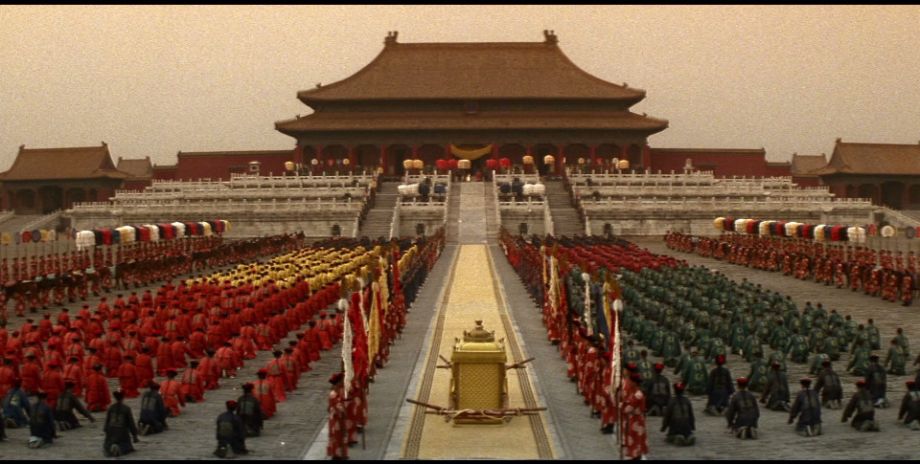
ART DIRECTION: THE LAST EMPEROR, The Untouchables, Radio Days, Empire of the Sun, Full Metal Jacket
COSTUME DESIGN: THE LAST EMPEROR, Radio Days, The Untouchables, The Dead, Matewan
FILM EDITING: ROBOCOP, Full Metal Jacket, Empire of the Sun, Broadcast News, The Dead
SOUND: ROBOCOP, Empire of the Sun, Full Metal Jacket, Broadcast News, Lethal Weapon
SOUND EFFECTS: FULL METAL JACKET, RoboCop, Empire of the Sun
ORIGINAL SONG: “Calling You” from BAGDAD CAFÉ (Music and lyrics by
Bob Telson) (2nd: “Someone to Love“ from Someone to Love (Music and
lyrics by Diane Bulgarelli), followed by: “(I’ve Had) The Time of My Life” from Dirty
Dancing (Music and lyrics by Frankie Previte, Donald Markowitz, and
John DiNicola); "Nothing's Gonna Stop Us Now" from Mannequin (Music and lyrics by Albert Hammond and Diane Warren); "Light of Day" from Light of Day (Music and lyrics by Bruce Springsteen); “Storybook Love” from The Princess Bride (Music and
lyrics by Willy DeVille); "Shakedown" from Beverly Hills Cop 2 (Music by Harold Faltermeyer and Keith Forsey; lyrics by Harold Faltermeyer, Keith Forsey and Bob Seger))
ORIGINAL SCORE: Basil Poledouris, ROBOCOP (2nd: Ennio Morricone, The
Untouchables, followed by: Alex North, The Dead; John
Williams, Empire of the Sun; Ryuichi Sakamoto, David Byrne and Cong Su, The Last Emperor)
ADAPTATION SCORE/SCORING OF A MUSICAL: Dick Hyman, RADIO DAYS (2nd: Mason Daring, Matewan, followed by: Carter Burwell, Raising Arizona; Elaine May and Paul Williams, Ishtar)
SPECIAL EFFECTS: INNERSPACE, Predator, RoboCop
MAKEUP: EVIL DEAD II, Harry and the Hendersons, Predator, Hellraiser, Innerspace
Showing posts with label R. Lee Ermey. Show all posts
Tuesday, April 19, 2016
Tuesday, April 15, 2008
Film #39: Full Metal Jacket
Maybe it's bizarre to start this review off with such an observation, but the problem with Oliver Stone's pre-emptive achievement with 1986's Platoon lay in that it, in effect, was Stone's (but perhaps not Hollywood's) simple way of glitzing over the true state of affairs during the Vietnam conflict, all in the name of good, clean, All-American storytelling. Stone's musculature was admirable; he'd finally brought out the fact that, deep down (for its fighters, at least), 'Nam was a war--not a cause for the generals or the protesters--but a bonafide war. That, in itself, was a telegram that required delivery.

But Platoon's downfall was thinly hidden within its maker's naive notion that warriors could be categorized into two broad subsets: the good and the bad. He oversimplified the matter, transforming the Vietnamese jungles into mere substitutes for the rolling plains of John Ford's Monument Valley, where the dirty virtuous fought--not always successfully--for victory over the supposed sinful. (Actually the film's not even as good as the typical John Ford western--it's more like a good b-film.) But that's not the end of Platoon's faults. Stone also made no attempt to address any of the real moral issues that inevitably surface in a war-time situation. He just showed the Vietnam jumble as how it's easiest to recall--as an updated, twisted rehash of Hollywood's Big One, WWII. There's the kind sergeant (Willem Dafoe) and the nefarious sergeant (Tom Berenger, in embarrassingly ridiculous scar makeup). Now, to which one is our hero (Charlie Sheen) going to be loyal? Anyone who couldn't guess how this was all going to turn out was sound asleep.
That's why it feels unfortunate that Stanley Kubrick's Full Metal Jacket was released at a time in which it'd inevitably be compared to Stone's parable. For people who thought that 1986's Best Picture winner Platoon fully defined the Vietnam conflict, Kubrick's 1987 should have come as a harder, heart-stiffening jolt. It's nothing like Platoon; in fact, it is its antithesis. Platoon featured a group of men (including Johnny Depp, Kevin Dillon and Forrest Whitaker) whose enemy was discernible--they were all just a phalanx of camouflaged gooks lurking in a few horizon-line bushes.
But, in Full Metal Jacket it often turns out that, in a militaristic environment where a soldier's life is threatened by the second, the enemy is very much within the predator as it is the prey. And whereas Stone preached the possibility of a black-and-white existence, Kubrick combats that with the view that the world and this relatively short-lived (but representative) situation is charcoal-colored. In this great director's purview, all death--Vietcong and American, hero and villain--is gory. As our hero, Private Joker (an extraordinary Matthew Modine) narrates while standing over a mass grave: "The dead know only one thing: it is better to be alive."
It is for this reason that Full Metal Jacket is the definitive Vietnam film. Very few filmmakers have even attempted to revisit it since its release in 1987, which should tell you something. Like the war itself, Kubrick's film has a rather "traditionally" unsatisfying ending, as it fails to provide audiences with pithy "don't let this happen again" axioms. And unlike the typical American vision of the war, Full Metal Jacket has sympathy and respect for ALL its characters, even those who didn't get a noble chance to fight. It finally, frankly realizes the utter madness that comes not only with combat itself, but with all things associated.
Based on Gustav Hasford's equally terse short novel The Short-Timers, Full Metal Jacket sports a completely gripping first third. In it, we're introduced to the freshly-shaved heads belonging to a new group of recruits, led by a tack-spitting D.I. named Sgt. Hartman (energetically played by real-life drill instructor R. Lee Ermey). It's Hartman's opinion that every man who enters the corps is destined only to be an emotionless, remorseless killing machine that's at no man's mercy. Throughout Ermey's thirty minutes of monologue time, we find his aim is to drive this notion home to his charges--even to those hardily resistant ones. Referring to all grunts by names he personally hands them (thereby reducing them to newborns), Hartman runs roughshod over sarcastic Private Joker, pipsqueak Texan Private Cowboy (Arliss Howard, in an overloooked performance), black Private Snowball (Peter Edmund) and a sloppily overweight bumbler deemed Private "Gomer Pyle" (Vincent D'Onofrio, in another of the film's acting standouts). Sgt. Hartman puts these men and more through a meat grinder of transformation: they become dull organs in a massive olive-drab death machine.
The kink is that Hartman eventually does his whipping job too well. The one man he's hardest on--the one that proves to be more gristle than apparent fat (Private Pyle)--is goaded too far into the game. He becomes, with the insolent help of his unsympathetic peers, one of the sharpest walking ironies that Kubrick and company ever concocted. Pyle is the essence of what the Marines require of each of its enlistees: cold, concrete malice. But Pyle also personifies fully-armed insanity, the one condition that can do the military more harm than perhaps even hatred. (Kubrick injects a bit of typical black comedy when he has Hartman holding such military-trained psychopaths as Charles Whitman and Lee Harvey Oswald up to his students as heroes to be emulated faithfully.)
After this gut-wrenching prologue to the real war (as if it hadn't already started), Kubrick's camera, to the appropriate tune of Nancy Sinatra's "These Boots Were Made For Walking," then turns to the battle-shredded streets of Vietnam, where Private Joker, along with his enthusiastic photographer Rafterman (Kevin Major Howard), is stationed as a reporter for Stars and Stripes, the military's in-barracks newspaper. After a few skermishes with the VC, Joker and Rafterman, both longing to get into the fight, are sent to the bullet-ridden streets of Hue City where the VC are trying to gain a foothold before the Tet offensive. There Joker is reunited with boot camp mate Cowboy, who is now third in command in a platoon that includes characters like leader Mr. Touchdown (Ed O'Ross), Eightball (Dorian Harewood), a vulgar and morbid hick called Crazy Earl ("You just don't lead 'em so much"--an memorably unfeeling line delivered by Kieron Jecchins), and a pitifully brutal grunt aptly named Animal Mother (yet another splendid performance, by Adam Baldwin).

All of this leads up to the second half of Kubrick's one-two punch (this is the very rare movie you'll see that doesn't have a third act--a courageous choice), in which the platoon led by Cowboy is having its members slowly picked off by an unseen sniper. The viewer, identifying with the extra-personable Cowboy, is confronted on all sides with such nerve-knotting stress that s/he hardly knows which way to turn: the company is miles away from its destination; the sniper is blocking a needed passageway; no assistance is coming; the enemy must be found, but can't be; two men are hurt but still alive; and what's left of the platoon is wasting its ammo on futile attempts at retaliation. The future, like the Vietnam sky, looks blighted and bleak. In this ultra-realistic, fatalistic finale Full Metal Jacket becomes almost unwatchable--which is, of course, Kubrick's goal.

If comparisons must be made to the director's past works, then this movie most closely resembles A Clockwork Orange more than its on-the-surface cousin Paths of Glory. Like the popular cyberpunk cult classic, Full Metal Jacket primarily deals with, in Private Joker's Nietzschian-appropriated words, "the duality of man"--the very fact that peace and violence coexists in all men (the famous graphic from the film's poster is the helmet worn by Joker that displays both a peace symbol and the painted-on boast "Born to Kill"). In A Clockwork Orange, one feels sorry for Alex (Malcolm McDowall) when he's driven to suicide by an enemy, even though earlier we sympathized with the enemy himself as Alex victimized he and his wife. In the same way, we feel hatred for towards the "Viet Cong" when they obstensibly mow down members of Cowboy's squad, but we also feel sickened at the film's end, or previously when joyous helicopter gunner Crazy Earl undiscerningly exterminates Vietnamese farmers as his chopper hovers over the innocent and the guilty as they run scared through an endless field of grain.
All of Kubrick's usual elements are certainly present in Full Metal Jacket: the fully-contorted, mask-like faces of the actors; the omnicient narration, delivered without feeling; the carefully chosen music (it's the first Kubrick film since Dr. Strangelove that doesn't contain any classical pieces--all of the original music is written by Abigail Mead, a thinly-veiled psuedonym for his daughter, Vivian Kubrick); the sumptuous, documentary like camerawork by Douglas Milsome (without which subsequent great war films like Saving Private Ryan and Black Hawk Down would not've been possible); the scarily accurate art direction, all erected not in the Phillipines, like Platoon, but controvercially in merry old England by the late art director extraordinaire Anton Furst, later an Oscar-winner for his famous work on Tim Burton's Batman; the punny word play (Private Pyle, wrongfully sitting on a commode in the middle of the night while loading his M-14 is warned by Joker that, if their D.I. catches them, they'll be "in a world of shit," after which Pyle searingly exclaims amidst tens of toilets "I AM in a world of shit"); the extremely accurate writing by Kubrick, Hasford, and Dispatches / Apocalypse Now writer Michael Herr (who later composed the revealing, loving 2000 memoir Kubrick); the inventive setting (I love that the film takes place largely in a city, and not in the jungles as in most every other Vietnam movie); and a characteristically strange climactic mix of optimism and bleakness.

It's one trademark alone, though, that makes Full Metal Jacket essential viewing for anyone who even has a passing like for movies: Stanley Kubrick himself. Once again, in 1987, twelve years before his last movie Eyes Wide Shut, he proved himself the genius the film fans and filmmakers always knew him to be. Bravo to a man who, until recently, dare I say, was verily walking godlike upon the earth.
(This review originally appeared, in shorter form, within the pages of of the June 7, 1987 edition of Georgia State University's student newspaper The Signal, in its weekly entertainment supplement Tuesday Magazine.)
Subscribe to:
Posts (Atom)


