I often wonder if we forget who we were and where we were and who we
were with when we see movies. This is a post that might remind you
how to make a list of the moviegoing experiences that most affected
you--and with the above criteria. These recollections are recounted in
the order of their happening, so they stand for me as a kind of moviegoing autobiography.
Butch Cassidy and the Sundance Kid (George Roy Hill, 69) The first movie I remember being impressed by, in 1970 or 71, at age four or five while seeing it (probably as a second feature) with my parents Buddy and Lynn and my Uncle Jeff at the Southeast Expressway Drive-In Theater in Atlanta, GA. Indeed, this is my first memory EVER, at least as far as I can make out. Seeing it at that age, somehow, the final freeze-frame up there on that screen lives forever in my mind. It is seared there.
The Good, The Bad and The Ugly (Sergio
Leone, 66) The first true epic I remember seeing all the way through, from beginning to end, with my parents Buddy and
Lynn, at Atlanta's long gone Northeast Expressway Drive-In around 1971, age five. Never
will I forget the red cursive scripts notating each characters' arrival, nor the film's final lines--and Ennio Morricone's eternal score--being broadcast through hundreds of
drive-in speakers at once. Watching Leone's movie for the first time remains a remarkable event in
my life.
The Poseidon Adventure (Ronald Neame, 72) The movie all 1970s kids loved, without exception. Saw it with my parents on opening night at a then (for us) very rare four-wall show at the Capri Cinema in Atlanta's Buckhead district (now the Roxy Theater, a live performance venue). I was instantly a fan. Everything in it felt so REAL, the cast was superb (highlighted, of course, by Shelley Winters' committed performance), and the craft of it all--the art direction, cinematography, visual effects, the sound and editing, and the John Williams score--remain impressive. I still have immense affection for it--the best of its genre, no question. I have the one-sheet hanging up in my household in a permanent steel frame.
Tales from the Crypt
(Freddie Francis, 72) The one horror movie that now leaves me with a warm, fuzzy feeling inside. I saw it first
with my parents at the Northeast Expressway Drive-In (where I could hear the gasps outside of neighboring cars during the first segment), and then saw it again, at my insistence, at the Fox Theater with my
grandmother and my cousin Greg. "Santa" grabbing at Joan Collins, that black-eyed zombie Peter Cushing, and a final plunge into hellfire all continue to make me smile with a certain malevolence. And, yes, I was six when I first watched it.
Bambi (Walt
Disney, et al., 42) I have no idea why (since I wasn't much of an animation fan as a kid), but
Bambi is the only movie I remember begging my father to take me to
see, at eight years old around 1975--and he did so on a weekday night at the drive-in while my exhausted mother stayed home! It's the only animated movie I
adored as a child, even with its famous shock value. That evening, my father and I departed before the second feature (
The Boatniks, with Bob Crane), probably because it was a school night, or maybe because the second movie was utter shite.
Tommy (Ken Russell, 75) I have no recollection in which theater I first saw this rock opera, because I caught it so many times when I was a child, all the viewings kinda now run together. I have a feeling I first saw it in a four-wall
theater (maybe at the Omni in Atlanta, one of the first 6-screen multiplexes in the city, though I also saw it many times at the Rhodes, Atlanta's long departed repertory cinema), as I recall the enveloping sound of The Who's music really making an deep impression
on me. So did the sight of the delectable Ann-Margret getting doused in chocolate, soap suds and baked beans! I loved this movie so much, from 1975 to about 1977, that I requested the soundtrack as a 1976 Christmas present, and so--to this day (since the soundtrack reprinted all the lyrics)--I can sing the entire score, completely word for word.
Tommy is the movie that may have DONE IT for me; so often, I insisted to my parents that we go see some random movie at the drive-in, just because this was the second feature. How wonderful they were for giving in to my requests! Watched it at least 40 times on cable and on home video, too, and trot the blu-ray out every once in a while. I still find the trauma scene with young Tommy being crippled by his parents' histrionics to be a shattering film moment. Seeing it as a 9-year-old had a tremendous impact on me.
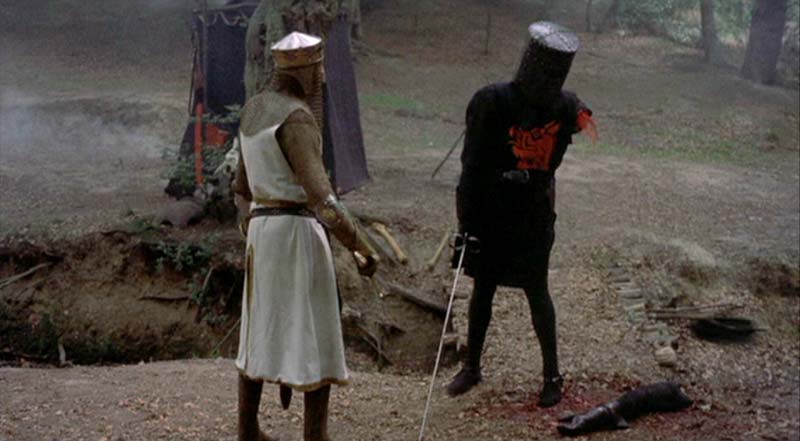
Monty Python and the Holy Grail (Terry Gilliam and
Terry Jones, 75) I snuck into this movie on its opening day at the newly twinned Phipps Plaza Theater in Atlanta; my parents were not, on this rare occasion, with me; I had traveled by bus to the theater, on a summer day, as a nine-year-old. Comedy, for me, changed with the viewing of this film. Its fourth-wall smashing went beyond even the stuff I'd seen in
Blazing Saddles, and that film-busting concept fascinated me as a kid.
Dog Day Afternoon
(Sidney Lumet, 75) One of the few movies I remember seeing with my parents in a
four-wall theater (The Broadview Plaza), and
certainly one of the first that completely floored me with its power. I
talked about
Dog Day Afternoon for weeks after I saw it, at 9 years old, and I guess
this let my parents Buddy and Lynn know what kind of child they had on their hands.
One Flew Over The Cuckoo's Nest (Milos Forman, 75) The second of a one-two punch that year that really let me in on what untold emotional heights movies could reach. Also seen at a four-wall, at Atlanta's Lenox Square Theater, a few weeks after my tenth birthday. Can you imagine a set of parents watching a movie like this, with a nine-year-old in tow, who was completely all in? I wish I knew what Buddy and Lynn were thinking at the time.
Close Encounters of the Third Kind (Steven Spielberg, 77) Even more so than
Star Wars (which was an almost equally memorable filmgoing experience), this was the movie that changed movies for me, at age 11. It let me know how huge and surprising they could be. The lines for
Close Encounters outside the Phipps Plaza theater were ridiculously long; this was something my parents and I were not used to. Lemme say, the wait was
certainly worthwhile.
Halloween (John Carpenter, 78) The audience I saw it with, at Atlanta's 99 cent Toco Hills Theater,
was about to goddamn attack the screen, they were so enthralled and VOCAL. I was 12 years old, and it was utter chaos
in that house! I will never, ever forget this.
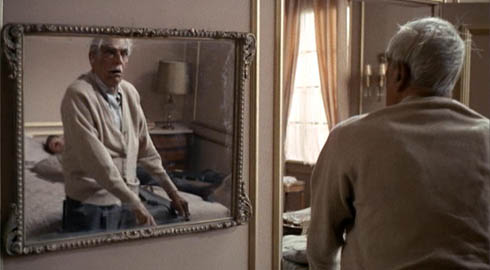
2001: A Space Odyssey (Stanley Kubrick, 68)
THE
formative film for me. I first saw it at 12 years of age in 1979 while visiting Atlanta's Rhodes
Theater, alongside the woman I credit with teaching me how to read (she denies it--she says I
already knew how to read--but she taught me how to read movies as well. Thank
you, Jane Garvey!). Back in the drive-in days, years earlier, I can still remember my parents complaining about the film: "All this crazy stuff, and then a baby shows up at the end?" They laughed hard about it, but I was in the backseat saying to myself "This sounds incredible." A film I've seen over 50 times on film on the big
screen; in 35/70mm, and in digital, it shaped my way of approaching a filmmaker's view (no matter how secretive), and it established my own parameters in judging a film's--any film's--craft. My mother later became a vociferous
2001 fan, by the way. Also, I should add: the last time I saw
2001 in 70mm was at the
Tribeca Film Festival in 2006 or so, with Matthew Modine, Buzz Aldrin, MIT A.I. expert Marvin Minsky, and Ann Druyan Sagan as part of the after-film panel.
Alien
(Ridley Scott, 79) Saw for the first time on opening day, the first
screening at Phipps Plaza, early in the afternoon. I was about to turn 13. Me and my best friend Juan Salazar, incurably excited,
skipped school to see it. That afternoon, there were about five other people in the
theater. Almost all the way through, Juan and I gripped the seats in front of us in horror. To this day, I look at
Alien with as many detail-drinking thrills as I did then.
Breaking Away (Peter Yates, 79) Saw it at the Toco
Hills Theater in 1979, and with a full-house crowd that roared at every joke, and
then literally stood up and cheered all the way through the finale. I missed seeing
Rocky with
an audience (I saw that film at the drive-in), so
Breaking Away was my first glimpse at what spirited verve a film's
finale could evoke.
A Little Romance (George Roy Hill, 79)
At
age 13, I saw it alone at Atlanta's Toco Hills Theater (a few times),
and on cable numerous times afterwards, and it left me a changed person,
because it transmitted deep lessons about love and attraction that, to this day, have never left me. It's also the only film that, when I now see it, ultimately delivers me to that
exact moment when I first experienced its pleasures. Thus I cry like a snotty baby, still, when
A Little Romance ends. I cannot help it.
All That Jazz (Bob Fosse, 79)
I traveled
on numerous occasions to see it at Toco Hills, Atlanta, 1979; I
watched it over ten times, over three weeks, and I simply could not
get enough of its energy, sexiness, darkness and power. I still see
All That Jazz as one of the movies
that should be adored by everyone. It gets the heart pumping, ironically enough.
Napoleon
(Abel Gance, 27) My first big screen silent film, with Carmine Coppola
conducting his newly-made score; saw it at the Fantastic Fox Theater in
Atlanta around 1981, age 15, and it left me struck absolutely dumb. It was my first silent film seen on the big screen, and with the incredible orchestra, and that finale with the screen opening up to the multi-colored triptych--well, there is nothing in my memory that likens this overwhelming experience!
Fail-Safe and
Dr. Strangelove
(Sidney Lumet, 64 and Stanley Kubrick, 63) A double-whammy of nuclear
bombardment, both seen all alone, on late-night TV (probably both on
either New York's WOR or Chicago's WGN) in 1982 at age 15. Of course,
nothing ever seemed quite the same afterwards. I can now sense the
stultifying stillness in the air occurring as I viewed each of these
works.
Psycho (Alfred Hitchcock, 60) After years of our
hearing about it, my horror-movie-loving grandmother allowed my and my cousin Greg to watch
it, on a tiny black-and-white TV, late at night, while we were camping out at
Georgia's Lake Lanier around 1981. Commercials aside,
Psycho was easily scarier seen
that way, with the sounds of all the bugs and crickets as background, and with our attention so focused! Thank you, Yaya!
The Sheriff and the Satellite Kid
(Michele Lupo, 79) As a 11-year-old Atlanta kid (I'm the one with brown hair in the above photo), I was cast in this
Italian film, shot largely in Georgia circa 1978. This happened in an
unusual way, with a casting agent literally spotting me on an Atlanta
street, and casting me right there. In 1979, I made 250 bucks a day (back when a buck was nearly a buck),
for three days, to act as an unbilled supporting player in this
now-cult-level Italian kids film with Bud Spencer (the star of so many spaghetti westerns I'd seen at the drive-in) and Cary Guffey (the kid in
Close Encounters of the Third Kind). After the filming, I waited patiently for it to arrive on American shores--and it never did. I
wasn't able to see
The Sheriff and the Satellite Kid until 1982 or so, at age 16. when it was featured as
part of early morning HBO programming, and I watched it with my
mother! So the first time I saw myself on TV, I was on HBO! By the way, I spent a portion of my earnings on buying my first albums:
The Beatles (1962-1965) on red vinyl,
The Beatles (1966-1970) on blue vinyl,
The Beatles (the white album) on white vinyl, and
Abbey Road (as a picture disc).
Ordinary People (Robert Redford, 80) Also seen with Jane Garvey, at the Loew's Twelve Oaks, at age 14, and the first time I
can remember dissecting a movie's entire inner life in a curious, critical
sense. The emotional impact of this movie floored me, and I had a hard time deciding between this and
Raging Bull as the best movie of that year; to me, the competition is still neck and neck.
Das Boot (Wolfgang Petersen, 81) The first time I saw it,
it was in the massive, 1000-seat Toco Hills Theater, with a sold-out
crowd. Despite the overwhelmingly huge screen, the high ceiling and the
air-conditioning, Petersen's film made us all feel as if we were being
crushed by metal, the sea, and the war. Each audience member in this house packed with 700 people was gasping for air by
the end.
Manhattan (Woody Allen, 79) I saw it first at the Rhodes Theater on a double bill with
Annie Hall, around 1982 (
Annie Hall had long been a favorite of mine at this point, having seen it around 1978 or so on cable TV). The big-screen experience of seeing
Manhattan so captivated me, it made this southern boy want to live, against impossible odds, in New York City (and I did, for nearly ten years).
Fanny and Alexander
(Ingmar Bergman, 83) Seen at the Lenox Square Theater, it introduced me to the glory of Bergman while I was sitting alongside my first girlfriend Elizabeth Thompson, who followed me
in adoring it (even if she made too much noise in the theater while watching it). Despite its more subtly terrifying aspects,
Fanny and Alexander still
evokes indescribably warm feelings for me.
Stop Making Sense (Jonathan Demme and Talking Heads,
84) The only movie I have ever seen that
commanded its audience to get
up and dance in the theater (really...people were
literally dancing!). The film awakened a strong beat inside me, and inspired me to play music (the rhythm section--Tina Weymouth on bass, Chris Franz on drums and Steve Scales on percussion--really did this). I saw it as a film critic for my college newspaper, The Georgia State University Signal, at the Lefont Tara in Spring of '85.
How to Find Your Wallet in Downtown Atlanta
(Greg and Dean Treadway, 85). My favorite of our Super 8mm movies,
shown in film class at GSU. In making it, my cousin Greg and I took my Super 8mm camera and snapped one frame every five steps we made, walking the miles between City Hall and Buckhead in Atlanta, GA. The effect was, then, spectacular. Plus there is nothing like seeing your own film played
for others--especially your first one!
Pretty in Pink
(Howard Deutch, 86) My first and only big-time movie premiere in spring 1986
L.A. Got to walk down the red carpet with all the celebs, and the movie was fine enough. At the after party, I shook Griffin Dunne's hand, watched George
Michael fall down and go WHAM, danced with Beverly D'Angelo and saw the Rave Ups and the Psychedelic
Furs perform onstage. I interviewed Molly Ringwald, John Hughes, Andrew McCarthy, and Jon Cryer (among
others) the following day.
Blue Velvet (David
Lynch, 86) I cajoled my NYU film student buddies into going to see this (at an East Side NYC theater near 18th St.)
instead of...something else totally forgettable...and the after-movie conversation was, as
you could imagine, incredibly lively! For my part, even
I didn't know what I was getting myself into, as the film completely gut-punched us all.
The Music Man (Morton De Costa, 62)
The Music Man was a longtime favorite
of mine on TV, but the only time I've ever seen it on the big screen was
at the Fabulous Fox Theater in Atlanta, GA, and I was in surprised tears all the way through. every song in this one (except "Shaboopie") is a masterful classic. One of
the happiest times I've ever had at the movies.
Lawrence of Arabia (David
Lean, 62) I had somehow avoided it on TV. I saw it, for the first time ever, with soon-to-be
screenwriting star Gary Sherwood at NYC's Ziegfeld on its 1989
restoration, on a ridiculously stormy night, with a hilariously irritating, chatty
woman behind us. Despite her contributions, the film
changed my view of cinema forever. And I'll never forget that, afterwards, when exiting the theater, we were greeted to the strangely poetic sight of the rain-swept New York streets littered with scads of twisted umbrella skeletons!
Touch of Evil
(Orson Welles, 58) I will never, EVER, forget running across it for the first
time on late-night TV in NYC. I immediately said "WHAT IS
THIS?"
and then I put the pieces together and figured out it was that Welles masterpiece that I'd never seen before. I then said to myself "Well,
there's nothing out there even REMOTELY like this!" It was a rare instance of me seeing something for the first time and immediately counting it amongst my favorites.
GoodFellas (Martin Scorsese, 90) I stood in line for hours to see it on its September 19th debut
night, at Manhattan's 59th Street Theater. I glimpsed Diane Sawyer waiting alongside her husband Mike Nichols. And I caught a gander at Bill Murray taking a
late seat in the second row after the film had started. You could feel the ground
quaking beneath you as you watched Scorsese's film for the first time. That's how momentous it was!
Seven Beauties (Lina
Wertmuller, 76) I watched this on recommendation from the manager of Atlanta's Plaza Theater, Robert Schnieder, who considered it one of his favorite
movies of all time. We watched it on VHS in the Plaza's upstairs office. Robert and I tripped hard on LSD and laughed our goddamn asses off, dark humor and all!
Robert Schneider's Kegel exercises in 16mm 3-D
(Robert Schneider, 70-75??) No one's gonna be seeing this beyond-unusual film anytime
soon. But what a night it was--The Pagan Festival of the Dead--with
hundreds of friends in attendance, and with The Subsonics playing live,
all in secret underground mode, at the Plaza Theater, Ponce De Leon,
Atlanta GA, 1994!! "It's trying to communicate!" (a reference to Cameron's
The Abyss, posited by my good friend Patrick Flynn).
The Wild Bunch (Sam Peckinpah, 69) I had caught bits and pieces of
it on TV, but had never seen it in full until the early 90s, when the
director's cut was theatrically rereleased. It let me know that there
was much more movie history yet to be seen, and it slayed me with its unparalleled
quality. Bill Holden's blue eyes, photographed by Lucien Ballard, are forever branded into my brain as he finally suggests: "Let's go." Warren Oates' answer? "Why not?"
Targets
(Peter Bogdanovich, 68) After reading about it over and over again in Danny
Peary's book
Cult Movies, I finally saw this on late-night TV, at about 2 in the morning, and I
was stunned by its originality and precociousness. Many years later, I got to see
Targets (set largely at a drive-in) at Atlanta's Starlight Drive-In, also at 2 am in the morning, and
got an even fresher perspective on its creepy brilliance.
The Gods of Times Square
(Richard Sandler, 99) Sandler's landmark documentary--available in a
longer director's cut now on DVD--was my crowning get as programmer of
the Dahlonega International Film Festival, located in North Georgia,
2001-3. That I got to see it on the big screen, with a large and rapt
audience, as the closing night film for a film festival I had
programmed, and in a unexpectedly LONGER directorial cut, was just
mindboggling.
The Matrix (Andy and
Larry Wachowski, 99) I saw it at midnight, at the North Dekalb Mall, on opening day, happily and
horrifyingly under the influence of LSD, with my cousin Greg as
companion. It was a sold-out crowd, filled with tough-looking dudes and their ladies. At a particularly exciting point--the fight between Neo and Agent Smith in the subway--the 35mm film we were watching burned and broke, and the lights immediately came up. Tripping hard now, Greg and I turned around to see the rest of the theater erupting into disbelieving chaos. Popcorn was flying up into the air and people were grabbing their heads and cursing and running out to the lobby. Greg said "We're gonna die in here." A minute later, the film started back up again, and we settled in for the duration. Later, I thought about it and said "Y'know, that was the perfect way to see that movie. It was like being pulled out of the matrix, just like the characters in the film, and we just sat there flailing and jerking about until the plug was put back in." Unforgettable.

Eyes Wide Shut
(Stanley Kubrick, 99) At the super-secret press screening at Phipps Plaza (with my TNT bosses Lisa Mateas and Phil Oppenheim in tow), I was
hyper-aware that this was the last time I was ever going to be
discovering a Kubrick film on the big screen. With each frame's passing, I was overcome with
emotion in saying a long farewell to my filmmaking idol.
Moulin Rouge! (Baz
Luhrmann, 2001) It astounded me and my mother outright at Atlanta's
Phipps Plaza. Even though I was dead-ass sleepy before it started, and completely skeptical about watching this film, I was
soon awakened, and how!
Funny Games (Michael Haneke, 97)
The
original, for infuriating and fascinating me like no movie ever had or
has: I saw it on video, by myself, on a sunny afternoon, and afterwards, I
had to go out and blow off steam about it to
everyone I encountered. The film seemed so radically unfair to me, I was sure that I hated it, until I realized that it had gotten under my skin in exactly the way Haneke intended.
West Side Story (Robert Wise and Jerome Robbins, 61) I had never seen it on the big screen until I saw it at Atlanta's Fox Theater in about 2003,
with my friend Brian Matson and his nieces as company. The sweeping nature of the
music and the visuals, and the overwhelming love the sold-out audience felt for the
film, convinced me I had stupidly overlooked its supreme quality.
Napoleon Dynamite (Jared Hess, 2004) I watched it with my good friend Brian Matson at the Northlake Mall multiplex in Atlanta, and
still cannot recall when I've laughed so hard in a movie theater. I had a headache afterwards, it tickled me so.I still consider the film to be one of the most meticulously directed comedies of the past couple of decades.
The New World
(Terrence Malick, 2005) Its utter beauty made me weep wholly unlike any other
movie ever; and the ticket guy at the Lafont Sandy Springs
theater warned me AGAINST seeing it. I took my friend Jane Garvey to see it one
night, and my friend Brian Matson the next night, and both were equally
overwhelmed.
Punishment Park
(Peter Watkins, 71) For shocking me to my marrow; I saw it on video in
the thick of the George W. Bush days, while completely alone and scared
outta my gourd. How does this movie even exist?
Grindhouse (Robert
Rodriguez, Quentin Tarantino et al., 2007) For thrilling me and my best
friend, the late Patrick Flynn, the last time we went to the movies together, in the middle of the day, at
Landmark's Midtown Promenade, Atlanta. Doubled over with laughter and working on a smuggled six pack of beer, we (and the very vocal but extremely small audience) could hardly process
the accuracy and adoration that went into this work.
Hair
(Milos Forman, 79) Through many cable viewings, I had been a fan of
this movie long before I saw it with a crowd in a Dumbo park setting during my
first summer in Brooklyn, 2008, with my friend Jennifer Morian. I also then knew it as a movie that, during that one
particular moment where Cheryl Barnes sings "Easy to Be Hard," would
reduce me to tears. I dutifully wept in the park that day, and I still
remember a kid nearby remarking "Mommy, that man is crying!"
O Lucky Man!
(Lindsay Anderson, 73) I had long been a fan of this stupendous film
before I first saw it on the big screen at Lincoln Center's Walter Reade
Theater in 2008. Malcolm McDowell was a guest at this screening, and I got to
sit with him while watching the final scene. I whispered into his ear,
as Alan Price's title song played out: "Greatest rock score ever
recorded." Malcolm gave me a big Alex DeLarge smile and lightly punched me in the
arm, as if to say "Damn right."
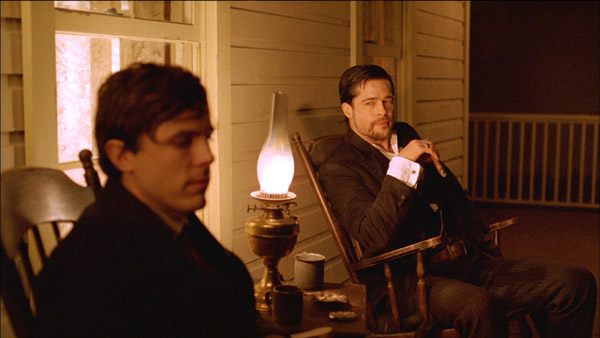
The Assassination of Jesse James By the Coward Robert Ford (Andrew
Dominick, 2008) It's rare that you see a movie that you, yourself, at
one time wanted to make, and which has been finished by a filmmaker you
think did a better job than you could've ever done. After reading about his story in the mid-90s, I wanted to write a movie about Robert Ford, and I went to see
Dominick's movie in NYC, at the AMC Lincoln Center megaplex during its opening week, with few fellow audience
members in sight. I was astounded at what unreeled before me.
 Once Upon a Time in Anatolia
(Nuri Bilge Ceylan, 2011) It was 8:30 am on a Friday morning at the
Walter Reade Theater press screening for that year's New York Film Festival. I was sitting beside my friend Tony Dayoub (of
Cinema Viewfinder). I had idea what to expect, and no
inkling of the movie's power, and though I had no coffee in front of
me, and though it was the first film I had seen at that year's
festival, and one I had never heard of prior, I was immediately captivated. As of 2013, none of this young decade's films have
affected me as deeply as this one.
2018 edit: I could easily add
Fiddler on the Roof and
Aliens at Atlanta's Columbia Theater in 1986/87,
The Congress at the 2014 Atlanta Film Festival,
Inherent Vice at its press premiere at 2014's New York Film Festival, and seeing Darren Aronofsky's
mother! at the Stonecrest Mall theater this past year. Hell, I could probably come up with 45 more!






 Once Upon a Time in Anatolia
(Nuri Bilge Ceylan, 2011) It was 8:30 am on a Friday morning at the
Walter Reade Theater press screening for that year's New York Film Festival. I was sitting beside my friend Tony Dayoub (of Cinema Viewfinder). I had idea what to expect, and no
inkling of the movie's power, and though I had no coffee in front of
me, and though it was the first film I had seen at that year's
festival, and one I had never heard of prior, I was immediately captivated. As of 2013, none of this young decade's films have
affected me as deeply as this one.


Just today, one of my favorite film bloggers, Sasha Stone of Awards Daily, posted a deeply loving defense of LEE DANIELS' THE BUTLER (which is the last time I'll be referring to it as such, because of the ridiculously pointless recent controversy over its original title, sans the director's name). Though I have read only a couple of relatively kind reviews, I have already gathered it's a movie that critics aren't going to get overly enthused about (however, there are raves for Oprah Winfrey's supporting performance, and for Forrest Whitaker's lead--and when has he not satisfied in anything?). And, though I have not seen it yet, I can understand this. For me, it just doesn't look that GREAT, although I am perfectly willing to admit it might be entertaining, and informative to some (most especially young viewers), and this is enough, is it not? Sasha's certainly right on point in her comments here. In the world of Oscar blogging, though--the world that Sasha Stone inhabits--we're at least ideally looking for the great, though we know, at least half of the time, the Oscars aren't anywhere near recognizing the greatest films of the year (that said, even many Oscar blogs don't come close to recognizing those films that deserve to be hailed). Yet, also, sometimes in their shunning of a certain movie, The Oscars get it correct (and, again, they more often get it wrong). I'm dunno what's gonna happen with THE BUTLER--as with all movies, I'm still hoping that it's terrific--but I do have some thoughts about the possibilities.
One thing that did kind of rub me the wrong way about Sasha Stone's piece (and perhaps I'm reading too much into it, but I think it's pretty obvious) was the notion that anyone who doesn't like THE BUTLER just doesn't like black film, or at least doesn't understand it, or its worth. And that those who do not are unjust film critics that should really start trying to make their own films rather than writing about other people's films. While I recognize that there are maybe MANY film critics out there who aren't as educated as some, this idea kind of erases the entire art form of film criticism, and it doesn't even take into account that, while book critics can easily write books, and music critics can easily play music, and food critics can easily cook, it's not as equally easy (even in this more democratic film age) to sit down and just make your own film. Film is radically different from other art forms in the sense that a film can rarely be made by one sole person; it requires collaboration, and by definition, collaboration goes against the idea of "one person, one vision." It's really this aspect of the article that got my ire up.
Anyway, I would advise you to read the article. And then I would council you to take a look at the trailer, then read my words, and come to your own conclusions, most preferably after seeing the film itself:
Here is my response, posted originally online at AWARDS DAILY:
Some thoughts:
1) It’s true there are a lot of bad critics, or bloggers, or whatever you wanna call ‘em, out there. On FILMICABILITY, I really try, in my writing, to discuss mainly the films I love, because I prefer talking positively about films over tearing down things that are just not my cup of tea–and that’s really how I feel about most movies I don’t like, or even despise: that there might be something there for someone, but perhaps not for me. However, on the podcast I do, when I do discuss something a film I don’t like, or one that I like but has problems, I do tend to be quite blunt. And I do try and suggest ways the film could have been improved (if I care, that is). Nothing wrong with that; it’s a form of expressing exactly what’s wrong with a picture. You’re correct, Sasha, in saying that some film commentators need to get up off their butts and direct or participate in the making of movies; doing so DOES sharpen one’s critical senses. I know this from having made my own films, TV shows, having programmed a film festival, and having worked on other people’s films (mainly as an actor and editor). But I don’t think filmmaking experience is absolutely necessary for the critical line of work–some commentators have just decided to be writers about film, and this is okay; this is no reason we should denigrate their opinions. The real question is, are their opinions (1) intelligently and fairly arrived at, (2) interestingly expressed, and (3) informed in all aspects. This is where a few (like you, Sasha) shine, and where many fall.
2) I’ve had discussions with a fellow critic at the NYFF, where we talked about the surly manner most film critics display. We characterized it as them sitting in their theater seat, before the movie, with their arms crossed, and sternly saying “Okay, impress me, genius!” They watch movies with a chip on their shoulder. Where my friend and I, we said that we go into every movie expecting something great, and only when and if things begin to turn for the worst do our judgment centers kick in. I think these other critics are just ready to be mean, because that’s what the internet has become–a mean place. I guess it’s more fun for some to write a negative review, and to make fun of something. I don’t get it. For me, it’s like going to a wake. And NOT an Irish one…
4) I like PRECIOUS (mainly for its performances, though I wouldn't have given it all the Oscar nominations it eventually got, simply because it didn't deserve them, though Mo'nique and Gabourey Sidibe were terrific in it). Still, a very good film. THE PAPERBOY is sweaty, trashy pulp, and that’s all it set out to be, and that makes it a success of sorts, even though it’s not really my thing. THE HELP was an underrated movie, for sure, even with all the attention it got–that was a film with integrity, and I liked how it framed the struggle for equal rights. I thought it worked, and was moving and inventive (though I don't wanna go overboard here--I recognize its faults). As for MALCOLM X, that’s a movie I admire and want to like a little more than I actually do. The first hour, with its out-of-place touches of comedy and musical theater, is where its major problems lie; the last two hours are extremely well done, though, and I agree I’d rather see it on the Best Pic nominees instead of either SCENT OF A WOMAN (execrable) or A FEW GOOD MEN (kind of a bore). However, I would posit that UNFORGIVEN indeed was the best movie of that year, and I bristle at any sort of implication that says that if you aren’t over-the-moon about MALCOLM X (or THE BUTLER, for that matter), then there’s something perhaps morally wrong with, or at least partially blinding, you. In 1992, there were many movies that were better than or on the same par with MALCOLM X: Unforgiven, Howards End, The Long Day Closes, The Crying Game (actually released in 92), Glengarry Glen Ross, Brother’s Keeper, Reservoir Dogs, One False Move (my favorite black-directed film of the year, by Carl Franklin), Baraka, Hard Boiled, A Midnight Clear, Bad Lieutenant, The Player, My Cousin Vinny, Twin Peaks: Fire Walk With Me, Passion Fish, The Story of Qui Ju, Deep Cover, Brother’s Keeper, Lessons of Darkness. MALCOLM X is certainly of more hubris than some of those movies…but better? I dunno…it’s debatable. Often it falls into that same lumbering trap that so many other biopics fall into–it’s just too bloated and reductive, with a cornpone edge to it that, luckily, in this case, starts to fall away as the movie progresses (its last half IS undeniably powerful). I respect Spike Lee's film more than love it (though I do love Denzel Washington's lead, and also Al Freeman Jr. as Elijah Muhammad, and I very much do recognize the film's historical import). At any rate, I have a feeling that this is how I’m gonna feel about THE BUTLER, but I’m keeping my mind open. (By the way, one of the mistakes that biopics–including MALCOLM X or, say, RAY–make is that, when they do a birth-to-death story, they get overloaded with information and you sort of lose the essence of the subject; biopics always do better when they examine only a short section of a person’s life.)
5) In my case, I truly adore black film, but I tend not to like it when I feel it’s being watered down for some marketing or budgetary or horribly race-based reason. I really prefer the classics: Killer of Sheep, Eve’s Bayou, Roots, Nothing But A Man, Shadows, Do The Right Thing, Mandabi, Cotton Comes to Harlem, Cooley High, Menace II Society, Sidewalk Stories, Hoop Dreams, Bird, Round Midnight, She's Gotta Have It, The Watermelon Man, The Autobiography of Miss Jane Pittman, Pinky, Imitation of Life, One False Move, The Green Pastures, The Jackie Robinson Story, To Sleep With Anger, Daughters of the Dust, Coffy, Richard Pryor Live in Concert, Sankofa, City of God, Car Wash, A Raisin in the Sun, Lady Sings The Blues, Dead Presidents, The Learning Tree, Greased Lightning, Carmen Jones, Blue Collar, Shaft, Xala, The Glass Shield, Hustle and Flow, the Barber Shop series, Foxy Brown, The Bingo Long Traveling All-Stars and Motor Kings, Far from Heaven, Deep Cover, Devil in a Blue Dress, Glory, Sounder, Claudine, How High, Malcolm X (the documentary), King: From Memphis to Montgomery, Moolaade, Fresh, Wattstax, Boyz N The Hood…that sort of thing. I think every one of those films (and, yes, a few were directed by non-blacks) is at or near masterwork level. And we’re not even getting into those drive-in movies from the 70s…those films some like to term "blaxploitation," but which I look at as being just another arm of black film. At any rate, if I were advising someone young and curious about the black experience, all around the world, I would recommend that they watch these movies–even one or two of them–over recommending something that I felt was substandard or really, not a great movie, but the best that we have available that’s new.
Anyway, Sasha, I liked your article and am glad you’re positive on THE BUTLER. I hope to be so, too, but if it doesn’t happen, it just doesn’t happen. I just felt compelled to comment on some observations you ably expressed.
My eventual review of LEE DANIELS' THE BUTLER can be seen here.