Showing posts with label The Assassination of Jesse James by the Coward Robert Ford. Show all posts

Saturday, November 26, 2016

2007--The Year in Review

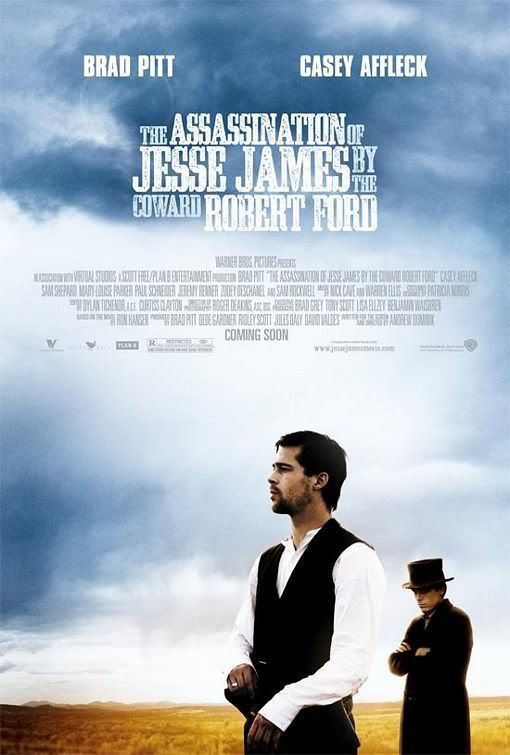
An incredible year for movies, top-heavy with masterpieces to the point where this can assuredly be deemed the last most astounding period for the art form. The top four are all western-US-themed--two set in the old (or nearly old) West, and two in a radically new West, and each are now violent modern classics. It was very difficult to pick the best of the best this year, but I had to go with the one that absolutely would not leave my mind after I saw it, and for years afterwards. The Assassination of Jesse James By The Coward Robert Ford was abandoned to a dismal box office showing by uncaring Warner Brothers execs. But when I first saw it on the big screen opening weekend, I was so dazzled by it that I left the theater stumbling in amazement at writer/director Andrew Dominick's complete mastery with words and images, all employed to transport us back to this momentous place in history, and all able to connect with our present fascination with celebrity and public adulation. I love that the film was further adorned with Casey Affleck's sadly empty and desirous Robert Ford (a performance I almost counted as a lead) and Roger Deakins' absolutely incredible widescreen cinematography, which literally makes us feel as we're seeing the past through a new (though old) lens. Still, I can watch it again and again, mining more great things from it. It endlessly feels like poetry.

At about the same time, Paul Thomas Anderson's There Will Be Blood was unleashed, and though I didn't get it the first time around (though I was instantly impressed with Daniel Day Lewis's reprehensible oil tycoon Daniel Plainview), I found myself gravitating to the movie more and more, to the point where I now see it as another invaluable P.T. Anderson masterpiece. Same goes for the Coen Brothers' No Country for Old Men, a gripping adaptation of Cormac McCarthy's Texas-set crime novel, and certainly a worthy choice for Best Picture, as the Academy deemed it. The saddest thing is that the Academy didn't even give one nomination to David Fincher's brilliant (though slightly flawed) look at the Zodiac killings that kept the San Francisco area in fright for more than a decade. Zodiac, with its remarkably invisible visual effects, remains perhaps the most underrated movie of the year, though it has competition in Sidney Lumet's nerve-wracked final film Before The Devil Knows You're Dead, Robert Rodriguez and Quentin Tarantino's pitch-perfect tribute to '70s B-movie glory Grindhouse (which I'm still waiting to see again on digital media in its original form), Mexican director Carlos Reygadas' completely gorgeous Silent Light, Gus Van Sant's unexpectedly beautiful look at the skateboarding subculture Paranoid Park, Andrzej Wajda's unbelievably devastating war drama Katyn; Danny Boyle's deeply felt yet faulty sci-fi drama Sunshine, and James Gray's tense tale of crime and family called We Own the Night. Though there were two movies that fought against it all (the Marion Cotillard-anchored Edith Piaf biopic La Vie en Rose and Julian Schnabel's inspiring The Diving Bell and the Butterfly), the sureness of death and darkness overtook the movies of 2007, to the point of utter brilliance. NOTE: These are MY choices for each category, and are only occasionally reflective of the selections made by the Academy of Motion Picture Arts and Sciences (aka The Oscars). When available, the nominee that actually won the Oscar will be highlighted in bold.

PICTURE: THE ASSASSINATION OF JESSE JAMES BY THE COWARD ROBERT FORD (US, Andrew Dominik)
(2nd: There Will Be Blood (US, Paul Thomas Anderson)
followed by: No Country for Old Men (US, Joel Coen and Ethan Coen)
Zodiac (US, David Fincher)
The Diving Bell and the Butterfly (US, Julian Schnabel)
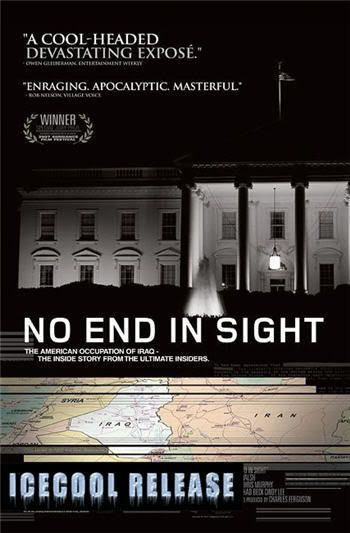
No End in Sight (US, Charles Ferguson)
Grindhouse (US, Robert Rodriguez and Quentin Tarantino)
Encounters at the End of the World (US, Werner Herzog)
Silent Light (Mexico, Carlos Reygadas)
4 Months, 3 Weeks and 2 Days (Romania, Cristian Mungiu)
Paranoid Park (US, Gus Van Sant)
Katyn (Poland, Andrzej Wajda)
Before the Devil Knows You’re Dead (US, Sidney Lumet)
My Winnipeg (Canada, Guy Maddin)
Gone Baby Gone (US, Ben Affleck)
We Own The Night (US, James Gray)
[●rec] (Spain, Jaume Balagueró and Paco Plaza)
La Vie En Rose (France, Olivier Dahan)
The Edge of Heaven (Turkey, Fatih Akin)
The Visitor (US, Thomas McCarthy)
Ratatouille (US, Brad Bird)
Superbad (US, Greg Mottola)
American Gangster (US, Ridley Scott)
I’m Not There (US, Todd Haynes)
Michael Clayton (US, Tony Gilroy)
Charlie Wilson's War (US, Mike Nichols)
The Savages (US, Tamara Jenkins)
Into the Wild (US, Sean Penn)
Once (Ireland, John Carney)
La Vie en Rose (France, Olivier Dahan)
Waitress (US, Adrienne Shelly)
Sicko (US, Michael Moore)
Persepolis (France, Vincent Paronnaud and Marjane Strapi)
Sunshine (UK, Danny Boyle)
Smiley Face (US, Gregg Araki)
Knocked Up (US, Judd Apatow)
Taxi to the Dark Side (US, Alex Gibney)
A Girl Cut in Two (France, Claude Chabrol)
Sweeney Todd: The Demon Barber of Fleet Street (US, Tim Burton)
Hannah Takes The Stairs (US, Joe Swanberg)
King of California (US, Mike Cahill)
Hot Fuzz (UK, Edgar Wright)
Enchanted (US, Kevin Lima)
My Blueberry Nights (Hong Hong/US, Wong Kar-Wai)
Year of the Dog (US, Mike White)
Lars and the Real Girl (US/Canada, Craig Gillespie)
Across the Universe (US, Julie Taymor)
The Bourne Ultimatum (US, Paul Greengrass)
Atonement (UK, Joe Wright)
Juno (US, Jason Reitman)
Walk Hard: The Dewey Cox Story (US, Jake Kasdan)
Cassandra's Dream (US/UK, Woody Allen)
Death at a Funeral (US/UK/Netherlands, Frank Oz)
The Lookout (US, Scott Frank)
The Mist (US, Frank Darabont)
Paranormal Activity (US, Oren Peli)
Redacted (US, Brian De Palma)
Helvetica (US, Gary Hustwit)
In the Valley of Elah (US, Paul Haggis)
Eastern Promises (UK/Canada, David Cronenberg)
The King of Kong (US, Seth Gordon)
Control (UK, Anton Corbijn)
The Darjeeling Limited (US, Wes Anderson)
Lust, Caution (Hong Kong/China/US, Ang Lee)
Transformers (US, Michael Bay))


ACTOR: Daniel Day Lewis, THERE WILL BE BLOOD (2nd: Tommy Lee Jones, No Country For Old Men, followed by: Richard Jenkins, The Visitor; Phillip Seymour Hoffman, Before the Devil Knows You‘re Dead; Michael Douglas, King of California; Brad Pitt, The Assassination of Jesse James By The Coward Robert Ford; Chris Cooper, Breach)


ACTRESS: Marion Cotillard, LA VIE EN ROSE (2nd: Anna Faris, Smiley Face, followed by: Anamaria Marinca, 4 Months 3 Weeks & 2 Days; Laura Linney, The Savages; Adrianne Shelley, Waitress; Ellen Page, Juno; Amy Adams, Enchanted)


SUPPORTING ACTOR: Casey Affleck, THE ASSASSINATION OF JESSE JAMES BY THE COWARD ROBERT FORD (2nd: Javier Bardem, No Country For Old Men, followed by: Paul Dano, There Will Be Blood; Robert Downey Jr., Zodiac; Hal Holbrook, Into the Wild; Kurt Russell, Grindhouse; Tom Wilkinson, Michael Clayton)


SUPPORTING ACTRESS: Cate Blanchett, I‘M NOT THERE (2nd: Tilda Swinton, Michael Clayton, followed by: Saoirse Ronan, Atonement; Amy Ryan, Gone Baby Gone; Marisa Tomei, Before The Devil Knows You’re Dead; Laura Vasiliu, 4 Months 3 Weeks & 2 Days; Sally Hawkins, Cassandra's Dream)


DIRECTOR: Andrew Dominik, THE ASSASSINATION OF JESSE JAMES BY THE COWARD ROBERT FORD (2nd: Paul Thomas Anderson, There Will Be Blood, followed by: Joel Coen and Ethan Coen, No Country For Old Men; David Fincher, Zodiac; Julian Schabel, The Diving Bell and the Butterfly; Carlos Reygadas, Silent Light; Cristian Mungiu, 4 Months 3 Weeks & 2 Days)


NON-ENGLISH LANGUAGE FILM: THE DIVING BELL AND THE BUTTERFLY (France/US, Julian Schnabel) (2nd: Silent Light (Mexico, Carlos Reygadas), followed by: 4 Months 3 Weeks & 2 Days (Romania, Cristian Mungiu); Katyn (Poland, Andrej Wadja); [●rec] (Spain, Jaume Balagueró, Paco Plaza); La Vie En Rose (France, Olivier Dahan); The Edge of Heaven (Germany/Turkey/Italy, Fatih Akin))


DOCUMENTARY FEATURE: NO END IN SIGHT (US, Charles Ferguson) (2nd: Encounters at the End of the World (US, Werner Herzog), followed by: My Winnipeg (Canada, Guy Maddin); Sicko (US, Michael Moore); Taxi to the Dark Side (US, Alex Gibney); Helvetica (US, Gary Hustwit))


ANIMATED FEATURE: RATATOUILLE (US, Brad Bird) (2nd: Persepolis (France/US, Vincent Paronnaud and Marjane Satrepi))


ANIMATED SHORT: I MET THE WALRUS (Canada, Josh Raskin) (2nd: My Love (USSR, Alexander Petrov), followed by: Peter and the Wolf (US, Suzie Templeton); Madame Tutli-Putli (Canada, Chris Lavis and Maciek Szczerbowski); The Ark (Poland, Grzezorj Jonkajtys))


LIVE ACTION SHORT: DENNIS (Denmark, Mads Matthieson) (2nd: Hotel Chevalier (US, Wes Anderson), followed by: Cutlass (US, Kate Hudson); The Mozart of Pickpockets (France, Philippe Pollet-Villard); Tanghi Argentini (Belgium, Guy Thys))


ORIGINAL SCREENPLAY: Kelly Masterson, BEFORE THE DEVIL KNOWS YOU'RE DEAD (2nd: Brad Bird, Jan Pinkava, and Jim Capobianco, Ratatouille, followed by: Tony Gilroy, Michael Clayton; Tamara Jenkins, The Savages; Diablo Cody, Juno)


ADAPTED SCREENPLAY: Joel Coen and Ethan Coen, NO COUNTRY FOR OLD MEN (2nd: Andrew Dominick, The Assassination of Jesse James by the Coward Robert Ford, followed by; Paul Thomas Anderson, There Will Be Blood; Ronald Harwood, The Diving Bell and the Butterfly; Aaron Sorkin, Charlie Wilson's War)


CINEMATOGRAPHY: Roger Deakins, THE ASSASSINATION OF JESSE JAMES BY THE COWARD ROBERT FORD (2nd: Robert Elswit, There Will Be Blood, followed by: Roger Deakins, No Country For Old Men; Christopher Doyle and Rain Li, Paranoid Park; Darius Khondji, My Blueberry Nights)

ART DIRECTION: THE ASSASSINATION OF JESSE JAMES BY THE COWARD ROBERT FORD, There Will Be Blood, Atonement, Elizabeth: The Golden Age, Sweeney Todd: The Demon Barber of Fleet Street

COSTUME DESIGN: ELIZABETH: THE GOLDEN AGE, The Assassination of Jesse James By The Coward Robert Ford, Sweeney Todd: The Demon Barber of Fleet Street, Across the Universe, There Will Be Blood


FILM EDITING: NO COUNTRY FOR OLD MEN, There Will Be Blood, The Assassination of Jesse James By The Coward Robert Ford, The Bourne Ultimatum, Zodiac

SOUND: NO COUNTRY FOR OLD MEN, There Will Be Blood, The Bourne Ultimatum, Sunshine, The Assassination of Jesse James By The Coward Robert Ford 


SOUND EFFECTS: THERE WILL BE BLOOD, No Country for Old Men, The Bourne Ultimatum


ORIGINAL SCORE: Nick Cave and Warren Ellis, THE ASSASSINATION OF JESSE JAMES BY THE COWARD ROBERT FORD (2nd: Jonny Greenwood, There Will Be Blood, followed by: Dario Marinelli, Atonement; Alberto Iglasias, The Kite Runner; David Shire, Zodiac)

ADAPTED OR SONG SCORE: Glen Hansard, ONCE (2nd: Alan Menken, Enchanted, followed by: Michael Andrews, Walk Hard: The Dewey Cox Story; Marc Shaiman, Hairspray; Paul Gemignani, Sweeney Todd: The Demon Barber of Fleet Street)


ORIGINAL SONG: "Falling Slowly" from ONCE (Music and lyrics by Glen Hansard and Marketa Irglova) (2nd: “Happy Working Song” from Enchanted (Music by Alan Menken, lyrics by Stephen Schwarz), followed by: “Walk Hard” from Walk Hard: The Dewey Cox Story (Music and lyrics by Marshall Crenshaw, John C. Reilly, Judd Apatow and Jake Kasdan); “Le Festin” from Ratatouille (Music and lyrics by Michael Giacchino); “Way Back Into Love” from Music and Lyrics (Music and lyrics by Adam Schlesinger); “That’s How You Know” from Enchanted (Music by Alan Menken, lyrics by Stephen Schwarz))


SPECIAL EFFECTS: ZODIAC, Sunshine, Grindhouse

MAKEUP: LA VIE EN ROSE, Sweeney Todd: The Demon Barber of Fleet Street, Elizabeth: The Golden Age

Tuesday, December 17, 2013

Film #159: The Assassination of Jesse James by the Coward Robert Ford


jesse 8

The passage of time, and of eras, overwhelms the film's first frames as cinematographer Roger Deakins aims his camera into the ether, capturing time-lapsed storm clouds speeding through the Missouri skies, with Nick Cave and Warren Ellis’ tick-tocky score sounding out like mournful timepieces ringing out the end of one hour and the beginning of another. We first see Brad Pitt’s Jesse James as a pensive, well-loved 34-year-old family man fervently contemplating his humanity and his concomitant mortality. The eloquent narration–some of the best ever written for a film–begins by illustrating Jesse’s foibles, normalcies, lies, physical flaws, and almost superhuman charisma. Actor/filmmaker Hugh Ross is the unseen narrator, who speaks in third-person as if he were dissecting this tale’s movements with scientific fervor; his serious, folksy voice is perhaps the most important in the movie, because it’s the authoritative reresentative of human history–the same history that will ensnare and mangle the lives of our two title characters, and of all others who near them.

Writer/director Andrew Dominik, working from Ron Hansen’s novel, laboriously crafts the language of this narration, making it feel like it was cribbed from an 1882 St. Louis newspaper. Even the film’s title–The Assassination of Jesse James by the Coward Robert Ford–reads like a bold headline over a story one might’ve consumed the day following Ford’s notorious bullet. This use of antiquated speech, inspired by Hansen’s work, is one of many tricks that the determined Dominik employs as a time-travel devise in this masterful period piece. Often, experiencing this picture’s sights and sounds feels like being hypnotized and transported directly into the heel of the 19th Century.


Having let us know, immediately, that this is going to be no ordinary shoot-’em-up (something that must’ve been a disappointment to Warner Brothers, who treated this complex film with shoddy bewilderment upon its 2007 release; it was a notorious and heartbreaking box office flop), Dominik quickly makes a tonal shift into the first dialogue scene, with king-of-the-court Jesse in good humor and communing with his still Confederate-loyal gang hours before what will be their final train robbery. It’s here, via boyish joviality, that we immediately get familiar with many of the story’s main players: the affable Charley Ford (Sam Rockwell); big talkin’ lover-man bandit Dick Liddil (Paul Schneider); poor and simple Ed Miller (Garret Dillahunt); and Jesse’s cousin, the quietly proud but hair-trigger Wood Hite (Jeremy Renner). Things are kept light…and then Robert Ford shows up. In a dark coat and a tattered, stunted stovepipe hat, Casey Affleck immediately captures our attention with his low-self-esteem shambling (Affleck’s idiosyncratic performance seems slightly influenced by Timothy Carey–something about those lidded eyes and that slightly slurred speech). Sucking the air out of the very forest, Ford puts on an uncertain smile and kneels down to join the boys, but–as it seems to have been for his entire life–the timing is all wrong. Just as he takes a seat, chowtime is called and the James gang goes running, leaving him by lonesome once again. This cloudy outsider desperately wants in.

jesse 11

Bob Ford decides to escape this scene and approach Frank James (Sam Shepard) for some validation. Bad idea. Here, we get more fully introduced to the way Ford carries himself. As he does throughout the film, in a performance of immense grace and empathy, Affleck employs a dazzling array of facial pyrotechnics–toothy smiles, tired and begging eyes, a nearly trembling chin, contrite glances downwards, humiliated glances sideways–in his first unsure attempt to sell himself (and Ford is ALWAYS trying to sell himself in this movie–that’s something that makes this story contemporary, since most of us are trying to sell ourselves to someone these days). This first monologue is key (we should remember: it’s given to Frank James, whom Bob respects but doesn’t hold in high regard as he does Jesse):

Bob: I was lyin’ when I said I just happened down here. I been lookin’ for you. I feel lousy I didn’t say so at the outset. (pause) Folks sometimes take me for a nincompoop on account of the shabby first impression I make, whereas I’ve always thought of myself as being just a rung down from the James Brothers. And I was hoping if I ran into you aside from those peckerwoods, I could show you how truly special I am. (no response from Frank, who lights a cigar). I honestly believe I’m destined for great things, Mr. James. I’ve got qualities that don’t come shinin' through right at the outset, but give me a chance and I’ll get the job done. I can guarantee you that. 

Frank James is, however, way past this manner of life, and is in no mood to hear talk of further exploits, and so he shuffles Bob Ford off with an assertive flash of his gun. But here we see that Bob Ford–who with his first line admits he’s a liar–is the much more unstable person. Through Affleck’s performance and Dominik’s authentic dialogue, we can sense Ford’s foot-stamping rage as he tries to be polite and brush off this rejection from someone he feels stole some of Jesse’s limelight. And, as we will see, Bob Ford is VERY protective over his OWN gilded image of Jesse James.

Dominik intercuts this intense scene with a revisit with the rest of the gang, whose characters become more defined as they talk about their exploits with women (and women are rarely seen in this film, although they do have a fleeting presence, not surprisingly as busy housewives or wide-eyed ingenues). Here, we sense the power of a couple more performances–the sad sugar of Dillahunt’s Miller, and the boss sassiness of Schneider’s Dick Liddil, who schools these guys on what words will and will not work on women. Obviously a devotee of poetry, Liddil understands the power of words, and this is among his weapons–it sets him a level above his ill-educated compatriots, at the very least. This scene provides the transition into Robert Ford’s first meeting with his idol. But Jesse’s see-through-you friendliness puts the flakey Bob off-guard, and leaves him feeling disappointed in Jesse’s lack of seriousness over what Bob sees as a valuable opportunity for him to buy into Bob’s sharp-shooting loyalty.

jesse 4

The robbery at Blue Cut is a showpiece for Deakins’ cinematography (and that’s saying something for a movie shot as impeccably as this one; this is certainly some of Deakins’ most notable work, in a career filled with masterstrokes). Here, as the narrator chimes in again, we get a fuller blush at the film’s visual splendor. We start to take more notice of the camera’s radically blurred lenses, superbly ground to create the feel of looking through hand-blown glass or, maybe, a crystal ball. We see Jesse, tinted by yellowed lantern light, listening to the tracks for activity, and–in an unusual camera move which results in such darkness as to require the viewer to momentarily lean on sound alone–we eventually catch the train emerging out of that inky blackness, its passing headlight refracting psychedelically through the reedy trees amongst which the James Gang lie in wait. Then we catch a towering glimpse of Frank James as the stone through which this steam-spitting locomotive cannot pass. The raiding of the train is memorable not for its brutality, but for its lack of it; while gathering what little loot they can, Ed Miller nervously warns Jesse against killing a meek clerk standing guard over the train’s questionable riches. Here, we get the first glimpse into Jesse’s murderous eyes, and into the notion that maybe something is afoul in this group–something beyond Robert Ford’s vampiric energy. As time further encroaches on the film through its memorably needling score, Jesse and Frank don’t even have to have words after the robbery. They know it’s all over.

But then there is Bob Ford, who shows up to energize Jesse again. For him, at this moment, and often throughout the movie, Bob is a window into the strange fame and adulation he’s achieved, and so Jesse is glad to have him around, for he has not much amusement to hang his hat on at this stage. It’s at this moment, too, that Bob Ford begins to recognize Jesse as someone who might spot his worth. I love the scene where Jesse and Bob smoke cigars on a porch, and Bob lets Jesse in on his fandom. This is where some of the movie’s present-day relevancy comes into play, as it feels like Brad Pitt is now playing a version of himself, having to listen to a slightly scary acolyte’s rapturous praise while trying to hold onto a self-image he can recognize. Meanwhile, Affleck has Bob come across as a kid who takes a wobbly joy in this opportunity, and then quickly realizes he’s playing at a risky game of barely comprehensible hugeness. It’s great how this scene begins, with Bob in little-child mode, bouncing between nervous near-tears and breathless adulation, regaling Jesse with how bad his day began and how well it’s ended, and Jesse calmly remarking “Yeah, it’s a wonderful world.” Just as brilliant is how the scene ends, with Ford revealing his disdain for Frank (a “nothing,” he slips); Jesse is obviously wounded by this, and here the air goes out of Bob Ford’s performance, especially when Jesse tells him those dime novels he takes such stock in are all lies. At this moment, which he typically tries to shrug off, Ford seems to take up residence on another, even more melancholy planet. This is a movie about the perils hidden in being famous, and in adoring the famous too much.

jesse 5

It doesn’t get much better for Bob the next morning, when Jesse chooses him as his footman while demonstrating his willingness to kill enemies by beheading a pair of snakes. Here we get the sense that Ford finally knows he’s been idolizing an unforgiving killer. Even so, all this “sounds like an adventure” to him, and taking the job is definitely a transient way for him to look better than the rest of the gang (even though Wood and Charley end up mocking Bob, as always; this movie, in another display of present-day relevance, touches on those revenge fantasies that many of the bullied have often, and still do now, turn into realities). The narration that follows keys us into another of the film’s themes: the intermingling of the hunter and the hunted:

Narrator: They moved to 1017 Troost Avenue at night so that the neighborhood couldn’t get a good look at them or their belongings. And then Bob thought Jesse would give him eight hours of sleep and a daydreaming goodbye. But with a second day in the Thomas Howard house, Bob thought he might never go, but might be brought in as a good-natured cousin to the boy and a gentleman helper to Zee. He went everywhere with Jesse. They made trips to the Topeka Exchange Saloon, where Jesse could spend nearly sixty minutes sipping one glass of beer and still complain about feeling tipsy. Bob would rarely vouchsafe his opinions as they talked. If spoken to, he would fidget and grin. If Jesse palavered with another person, Bob secretaried their dialogue, getting every gesture, reading every inflection and tic, as if he wanted to compose a biography of the outlaw, or as if he were preparing an impersonation. 

 
After Bob is sent away by an increasingly creeped-out Jesse, we get into the film’s mesmerizing second act, detailing the machinations that set the barely-regarded Robert Ford swirling into a tornado of destined events that’ll send him crashing into the “Thomas Howard house” almost seven months later, with Jesse at the end of his gun. Dick Liddil’s copious feel for female flesh–at first a plot element that seems superfluous–ends up being the lit match that melts the tar holding Jesse’s gang together. It spurs Wood Hite to seek revenge against Liddil (for diddling his elderly father’s young wife, played with a saucy impertinence by Alison Elliott). This sets Bob Ford against Hite, whom he dispatches in a steady but lucky shot (probably more inspired by Hite‘s mockery of Ford, and his closeness to Jesse, than by Liddil’s well-being); and this sets Bob and Charley finally in the same camp, bound by blood to protect each other, despite all the years Charley has spent ribbing Bob for his gaga droolings over the James itinerary.

All this intrigue comes amidst rumors that Liddel and Ed Miller are planning to backstab Jesse (this leads to an excellent scene with Bob Ford taking a bath out in a meadow, and Liddil threatening him with a pistol shot if he ever lets on anything he knows; Schneider, a veteran of David Gordon Green’s All The Real Girls and, later, Jane Campion’s Bright Star, is really splendid here with his honeyed phraseology and sly vocals). Jesse, however, seems to know all that’s going to happen before it does and so it’s no surprise he’s onto the virtually translucent Ed Miller, whom he visits in an extremely tense scene that highlights Dillahunt’s stammering yokel as a grim figure submerged over his head. Dillahunt had an extremely good year in 2007, appearing in both this and Joel and Ethan Coen’s No Country for Old Men. Unlike that film appearance, he brilliantly cuts a pale and underfed profile here–one painfully blue, unloved and discarded.

jesse 6

Eventually, Jesse is compelled to visit the Ford brothers, ostensibly to ask them to help him case another bank, but really to see if there are any fissures in their loyalty. This leads to another of the film’s most quietly explosive scenes, with Sam Rockwell’s boisterous Charley at the family dinner table, trying mightily to distract Jesse’s sense of something amiss by making Bob the butt of jokes. But Bob turns things around for himself, and for the on-edge family: through this exchange, he both reignites Jesse’s inexplicably prescient fascination with him and, with a subsequent tantrum, underscores his own strong scent of disloyalty:

Jesse: Give me some more conversations, Bob.
Charley: I got one. (laughing hard) This one’s ’bout as crackerjack as the one–
Jesse: Let Bob tell it.
Bob: (long pause) I don’t even know what you’re talking about.
Charley: About how much you and Jesse have soooo much in common.
Jesse: Go on, Bob.
Charley: Yeah, come on, Bob. Tell us a story.
Bob: Nope. Nope.
Charley: C’mon, entertain Jesse. He’s here…c’mon
Bob: (long pause as his hems and then smiles) Well, if you’ll pardon my saying so, I guess it is interesting, the many ways you and I overlap and what not. I mean, you begin with our daddies. Your daddy was a pastor of the New Hope Baptist Church; my daddy was a pastor of a church at Excelsior Springs. Um. You’re the youngest of the three James boys; I’m the youngest of the five Ford boys. Between Charley and me, is another brother, Wilbur here, with six letters in his name; and between Frank and is another brother, Robert, also with six letters. And my Christian name is Robert, of course. You have blue eyes; I have blue eyes. You’re five feet eight inches tall. I’m five feet eight inches tall…Oh me, I must’ve had a list as long as your nightshirt when I was twelve, but I’ve seem to have lost some curiosities over the years. (the camera remains on Bob longer than it should; the smile drifts off his face).
Jesse: (after staring at Bob for a while, grinning) Ain’t he somethin’?

jessie 15

By the time the government gets wind of Dick Liddil’s whereabouts, Robert Ford has enough animosity built up against Jesse that something has to give. Searching for any way he can finally become as notorious as his hero, Bob Ford–like many modern assassins–finally turns against his idol. With the collusion of some Missouri lawmen (Ted Levine and Tarantino favorite Michael Parks) and under the direction of Governor Crittenden (played by former Bill Clinton advisor James Carville, in a sharp, surprising cameo), he gets caught up in a false sense of importance. Even the government, who’s depending on Bob’s commitment to this manhunt, seem to belittle his abilities. They know they’re well past the scrapings and into the barrel. But they’re trying everything they can–even putting their trust in someone who may frankly be a madman. And Bob is extra willing to play along, especially if it can fill the hole inside himself, if only for a short while (“I’ve been a nobody all my life,” Ford tells Levine’s Sheriff Timberlake. “I was the baby–I was the one they made promises to they never kept. And ever since I can remember, Jesse James has been big as a tree.”)

Jesse, meanwhile, comes to a new appreciation of the Ford brothers, having forged a bond with Charley after asking him for and tentatively believing Charley’s version of the truth regarding Dick Liddil and Wood Hite. It’s Charley who seals his own and his brother’s fates, with the final selling of Robert Ford. And as Jesse has no other associates whom he can even remotely count on (none that are alive, at least), he relents in letting Bob back in the gang. But he does so because he’s already seen death approaching; while stalking fish under the ice of a frozen lake, he tells Charley “…one thing that’s for certain: you don’t mind dyin’ once you’ve peeked over the other side. You’d no more wanna go back to your body than you’d wanna spoon up your own puke.”

jesse 14

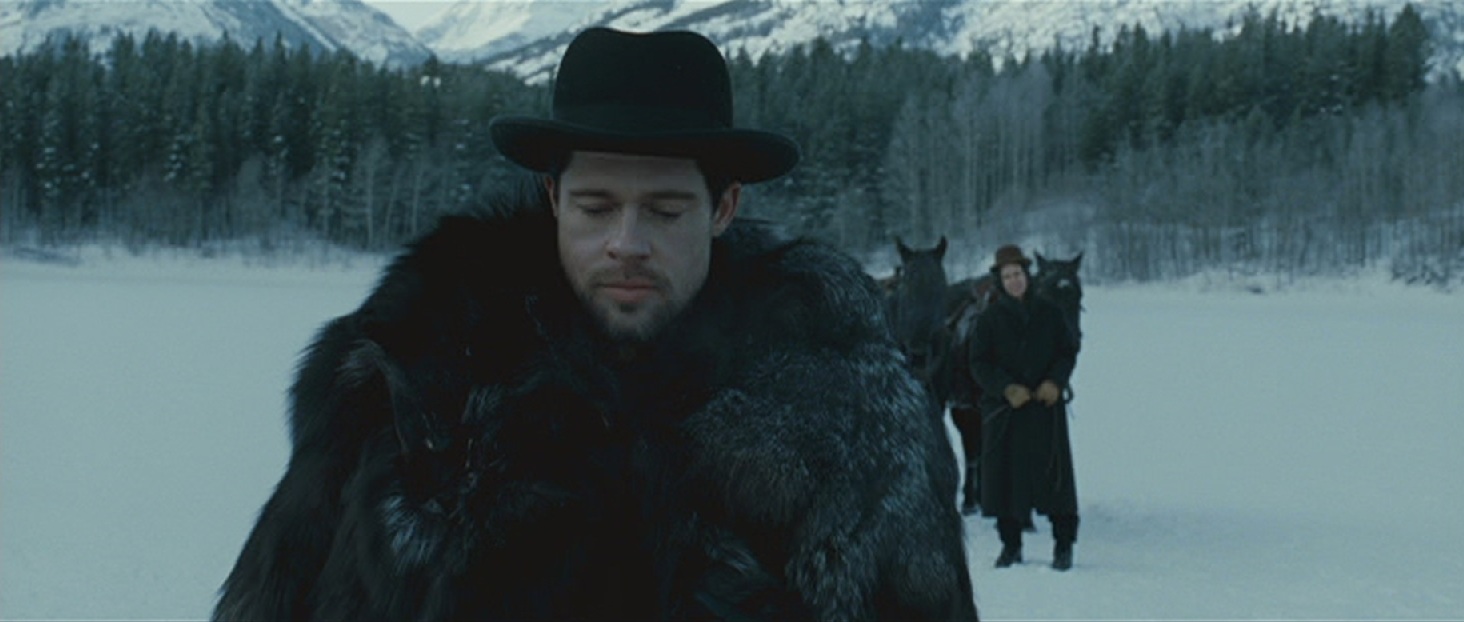
True to its title, the film’s final act dramatizes James’ death, with a sweaty Robert Ford nervously ramping up to his deed, and Charley over in the corner, gut-sick with guilt and fear. But we get the most unguarded insight into Robert Ford’s persona after Jesse’s death–after we as an audience feel the loss of Brad Pitt’s glamour from the film (Pitt’s terrific throughout, especially when being menacing or playful, or both at the same time). Ironically, it’s while he’s making his living as a stage star, in hideous makeup and with wooden line readings, recreating his murder of a superstar criminal and folk hero night after night (with Charley portentously standing in as Jesse), that we are finally clued in to Bob’s secret feelings of shame and confusion (particularly in the scene where he bares his feelings to his understanding paramour, played gently and all too briefly by Zooey Deschanel). It’s in this section that Affleck’s Robert Ford becomes truly tragic–not just simply an accidental monster or a wayward goof, but a frightened, neglected man-child with delusions of glory and ill-gotten fame, a man who still respects Jesse James’ code of loyalty and who ultimately joins the rest of the world in seeing himself as a Judas enriched with only a few mollifying pieces of silver.

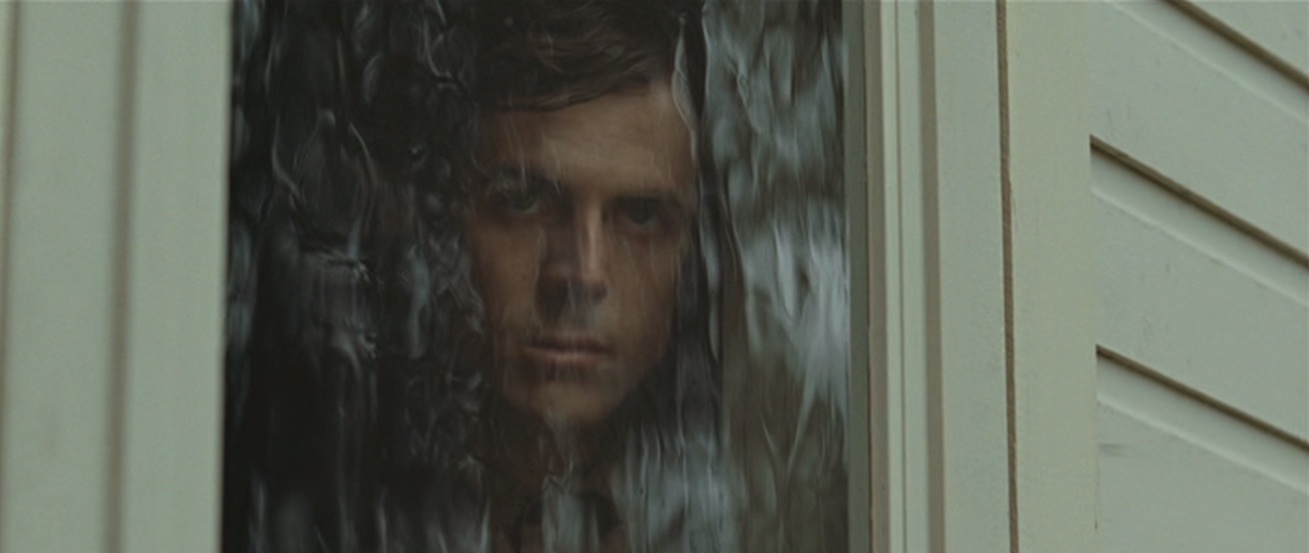
As director, Andrew Dominik showed promise with his debut film Chopper. But nothing he displayed there prepared me for seeing The Assassination of Jesse James on the big screen upon its release. The film’s glorious visage swallowed me up whole–it felt so monumental and yet so intimate. It’s a film that screams to be seen in clarity and enormity, even though Dominik is fond of using the 2:35 frame to box his characters in behind windows, through doorways, reflected in picture frames or mirrors, or simply in claustrophobic settings. Scenes in the Missouri countryside can be expansive, but mostly in transitional moments. Often, we feel somewhat trapped even when the camera’s under open skies. Deakins’ design of the color palette is realistic without being overly sepia, as many period pieces make the mistake of being these days; his blacks are particularly striking in both the robbery scene and also especially in Jesse’s ride with Ed Miller (where Jesse almost–but not quite–disappears into the darkness). But I’ll really never forget first drinking in all those shots filmed through altered lenses and blown glass; they add the eeriest feel, like we’re peering through a prism into another world. Dominick is doubly wise to have a costume designer (Patricia Norris) that doesn’t overdress an actor, and production designers (Ms. Norris and Richard Hoover) that don’t overdress a set–everything seems authentically spare when needed, and ornate when needed otherwise (as in the final half, which toys with the upper crust).

jesse 9

The natural and layered sound work (with that insanely great Cave/Ellis score) adds a further note of detail, and the editing, by Dylan Tichenor and Curtis Clayton, is measured and well-timed (some might consider Assassination slow, but I don’t). This 160 minute film went through some trying episodes in post-production, and Dominik says there’s still about 10 minutes he’d like to add back in, including a late-film sequence he calls “The Garden” which the director maintains is the film’s best scene (he was asked by Warner Brothers to trim Assassination after he delivered an even longer initial cut; we should consider ourselves lucky, though, because Warners was proposing a 102-minute massacre that would’ve gutted the movie).

As it is, with the last confident salvo of Hugh Ross’ narration (which is truly ravishing--some of film history's most stunning final words), the viewer is sent stumbling away, stultified, jolted by the film’s meticulous design, with Robert Ford’s dead stare frozen as a reminder that notoriety received without integrity is really best refused. And with that, Andrew Dominik’s The Assassination of Jesse James by the Coward Robert Ford makes its way into the top pantheon of western epics. Perhaps more accurately than any genre entries that preceded it, this movie sets us right square into that age where a certain violent strain of honor gulped its final, inextricable taste of air. It tells a yarn with as much resonance today as it had in 1882, and it does so with one of the finest film performances ever–Casey Affleck’s sorry, sorrowful, pitiful Robert Ford–working in tandem with Dominik’s uncommonly lyrical vision and fate-filled language. It's a movie unlike any other. 

The Assassination of Jesse James by the Coward Robert Ford is now enjoying a huge revival, spearheaded by superfan Jamieson McGonigle. His efforts to reignite passion for this neglected masterpiece resulted in sold-out two screenings at The Museum of the Moving Image in Queens, New York City (attended by director Dominick and author Hansen).  Happily, though, and with the director’s approval, McGonigle–who owns his own personal 35mm print of the film–is looking for other venues, in other cities, in which to bring this masterful movie to life on the big screen once again. If you’re interested in contacting him, here is the Facebook page for this devoted revival.  

NOTE: This article originally appeared as entry #12 in Wonders in the Dark's overview of cinema's 60 greatest westerns.  

jesse 10

Tuesday, February 26, 2008

The 80th Academy Awards--overview

The 80th Oscars, of course, were given out on Sunday the 24th of February, 2008. I have been a lifelong fan of the Oscars and their ability to teach us about some of the best the picture biz has to offer in any given year. This is not to say that I agree with their picks as a whole; 60% of the time, I disagree to whatever they picked as a winner, for any given year or category. Yet I still value them...why? Why? Because of the nominations.

While the winners aren't always up to par, the nominations are usually spot on. If they're not, they're at least 3/5s right, which has always been okay for me. I learned much of what I learned about movies not by going to school, but by studying the Oscars with an open, critical mind, and searching out the films in the past that had been nominated. Even if they're terrible, like Ghost (Best Picture nominee, 1990), Scent of a Woman (Best Picture nominee, 1991), or The Greatest Show On Earth (Best Picture winner, 1952), they at least tell you something about the history of movies--their cultural, economic, and artistic impact--and what was considered innovative, at the time, in all technical and artistic aspects of the craft.

Hey, I'm a movie nerd. I get off on seeing who's going to win Best Art Direction, Documentary Short Subject---things like that. I'm a statastician when it comes to this stuff. This is my stand-in for sports. I dunno who hit how many home runs at Fenway Park in 1965, but I can tell you all the nominees for Best Sound in 1972, the first winner for Best Supporting Actress, and all the performances that earned Meryl Streep a nomination. Right off the top of my head. It'll do no good to demonstrate now--how would you know I was telling you the truth? But I can.

Seeing as how I look at the Oscars in a different way, it so follows that, to me, the inevitable wrap-up articles about how boring the show always is--well, they're more boring than the show. My message to the writers of these pieces: look, if you don't have anything positive to contribute, then don't tune in, don't write the article, tell your editor to get someone else for the job. This is not to say that the Oscars are faultless as a TV show. But it's an AWARDS show, and if you're not interested in the winners, then maybe you should just look elsewhere for your entertainment. Because what these critics are missing is the fact that this is a coronation of the at-the-moment tops of an industry that's still provides America's #1 export.

Often I also hear the Oscars criticized for nominating movies no one's ever heard of. But that's not a fault, that's a sign of taste. I'd rather them nominate tiny movies than the big boring behemoth blockbusters. As a moviegoer, you hopefully want to watch the best of the best, right? And we know that box office take has nothing to do with that, right? Riiiiight...

If you're a student of movies, you by no means have to pay strict attention to the Oscars. But a mild attention doesn't hurt and is even in fact helpful. If you make a list of every film nominated for even one Oscar in any given year, trust me, you're going to end up with a list of at least 30 valuable films that could change your life and your tastes. And what's wrong with keeping a list like that? To me, this is what makes the Oscars great---they are a learning tool for directionless moviegoers.

And even the debate about what is shafted, what is left out, forgotten unjustly or justly--this is valuable, too. It shapes our popular vernacular, flooding memes into our gossipy, filmic world. And it shapes movie history. I find the whole march of the Oscars to be joyous in its scraping, bowing, unctious, pompous, precient, ostentacious, regretful glory. It's a celebration of movies--not just of the actors, but the film editors and sound people and effects people and so forth...these are very normal people, just like you and me, winning Oscars--the same Oscars that the "stars" recieve. In a way, they're the great equalizer for those of us interested in film; anybody can get one, if they keep doing what they love.

I tried to blog about the show as I watched, but I got too wrapped up in just simply watching. But I did produce a few paragraphs. Here they are: I'm sitting here in my room, because as much as I like the idea of Oscar parties, I can't stand to hear all the noise from people who don't care about the details. I treat the Oscars like a film, one that I give myself over to intermittantly, I must admit, but still most more than most movies I see. So I'm watching the Oscars, intently.

Jack Nicholson is on now, I gotta watch; he's introducing a clip package paying tribute to the other 79 Best Picture winners. Tried to guess all of them before they came up, but to an only 50% score, most of my points near the end.

Surprised that Film Editing went to The Bourne Ultimatum, not that it's not deserved--it is. But most of the time, whatever wins Best Editing wins Best Picture. It's rare to see a movie win that isn't even nominated for the top award. The last time I remember this happening was with The Matrix back in 1999.

Robert Boyle, art director for North by Northwest, The Birds, Fiddler on the Roof, The Russians are Coming, Gaily Gaily, Shadow of a Doubt, and many others, wins the Honorary Oscar, which explains why I haven't heard about this. Not even the Oscar site mentioned his win. It's a crime for this guy, who is a great figure in movies; they should have trumpeted his win more. I love it when they give wins to specific artisans like Ennio Morricone, Alex North, Michael Kidd, and now Robert Boyle. My vote for the next Special Oscar: (1) Gordon Willis, cinematographer, (2) James Ivory (writer, director, producer), (3) Lauren Bacall, (4) David Lynch, (5) Werner Herzog.

Poland's Andrej Wajda and Russia's Nikita Mikelhov are both nominated for the Foreign Film award this year, but I was thinking that they've both got Oscars, so I picked (without seeing any of the nominees, Israel's Beaufort, because of it's timely subject matter. But Austria gets it for The Counterfeiters. It seems like a Holocaust movie; if I had known that, I would've picked it.


Final nominated song, from Enchanted--come on out, Amy Adams (her performance of "Happy Working Song" was a highlight; I just adore her--she's gonna win an Oscar someday, too). Oh, ugh, John whatever...sloppy song, no way it'll win. I'm now thinkng that August Rush song is gonna win--pretty catchy. But I'm sticking by my prediction for the team from Once to win. And they do. Terrific. Whoda thunk one of The Committments would one day win an Academy Award? It's a wonderful world. Also very classy of Jon Stewart to let the woman who co-wrote the song come out and say her peace to the world. I would think that if you won an Oscar and didn't get to say your thanks, that it would eat away at you for a long time. All the winners deserve some mic time. So let's do a rundown of my predictions:


Best Picture: No Country for Old Men (got it--no surprise there; well-deserved, though I thought the Best Picture of the year was the mesmerizing Assassination of Jesse James by the Coward Robert Ford).


Best Actor: Daniel Day-Lewis, There Will Be Blood (everybody was predicting this; a fine performance, though a little too John Huston-y for my tastes. I would have still given the award to Casey Affleck for Jesse James; he was nominated in the support category, but he was really the lead. He carries the movie).

Best Actress: Marion Cotillard, La Vie En Rose. (Missed this one. was predicting Julie Christie, but even I was having second thoughts about it, and was predicting a Cotillard upset. Haven't seen the movie, but she does look amazing in it. I still wanted Christie to win, though; loved her in that movie.)

Best Supporting Actress: Tilda Swinton, Michael Clayton. (I went for Amy Ryan in Gone Baby Gone; I think vote-splitting is responsible for this surprise win. The race seemed to be between Blanchett, Dee, and Ryan, so it's a viable explanation. Swinton plays a great, insecure villain in the film, but I would have gone with Kelly MacDonald in No Country for Old Men. She was so sweet in that film, and I really felt for her hapless character).

Best Supporting Actor: Javier Bardem, No Country For Old Men (predicted it, and am in total agreement with it, considering that fellow nominee Affleck was placed in the wrong category) By the way, this was one of the only years where not one of the winning actors was American--we have an Irishman, a French woman, a Brit, and a Spaniard. Wild!


Best Director: Joel and Ethan Coen, No Country For Old Men (predicted it, and they deserve it, for their 20 years of great movies; first directing team to win the award since Robert Wise and Jerome Robbins for West Side Story back in '61).

Best Adapted Screenplay: Joel and Ethan Coen, No Country for Old Men (got it, and a fantastic adaptation. I still would have gone with Andrew Dominick's beautiful language in Jesse James).

Best Original Screenplay: Diablo Cody, Juno (predicted it, unfortunately. Overly clever screenplay has more in common with snappy TV writing; in fact, I predict a spinoff TV series. It would do really well, I bet; by the way, I would have gone with Ratatouille).

Best Animated Feature: Ratatouille (an easy pick, and a good one, too).

Best Foreign Language Film: The Counterfitters, Austria (I went for Beaufort from Israel; I think 4 Months, 3 Weeks and 2 Days from Romania was the best of the year).

Best Cinematography: Robert Elswit, There Will Be Blood (Another unimaginative brown-hued period piece--Elswit's work for Michael Clayton was better; I go for the colorful depiction of the west provided by nominee Roger Deakins for Jesse James. I mean, seriously, when is Deakins (left) going to win?--he's the very best cinematographer working today! He was even nominated twice this year--also for No Country for Old Men!

Best Art Direction: Sweeney Todd (I predicted There Will Be Blood, but I should have known a Tim Burton movie would take this award again; Sleepy Hollow and Batman also won Art Direction awards).

Best Costume Design: Elizabeth: The Golden Age (I got it easy--always the most opulent costumes win; I would've gone for Jesse James).

Best Film Editing: The Bourne Ultimatum (Suprised this didn't go to the Coens for No Country For Old Men, which would have been my choice, too).

Best Sound: The Bourne Ultimatum (Great job there, but I can't beilieve this didn't go to No Country For Old Men; the sound was the STAR of this movie).

Best Sound Effects Editing: The Bourne Ultimatum (missed it; see above) '

Best Original Song: "Falling Slowly" from Once (got it, and it was my personal pick as well).

Best Original Score: Dario Marianelli, Atonement (got it, though I would've liked to have seen Nick Cave win for his tense Jesse James score).

Best Documentary Feature: Taxi to the Dark Side (I was going for No End In Sight instead, probably because it was my fave doc of the year).


Best Documentary Short: Freeheld (got it--it was a guess) Best Animated Short: Peter and The Wolf (I went with I Met The Walrus, but just because I'm a John Lennon fan).

Best Live-Action Short: The Mozart of Pickpockets (I guessed Tanghi Argenti)

Best Visual Effects: The Golden Compass (I picked Transformers, but would've personally liked the award to go to Sunshine, the brilliant Danny Boyle sci-fi movie that I feel was one of the year's most overlooked treasures).

Best Makeup: La Vie En Rose (I was going for Norbit, but once I saw the amazing makeup transformation done in this movie, I knew I was wrong; well-deserved).

So I got 12 out of 24--50% right. Not a good year for me--usually I get about 16-18 right. Oh, well...next year maybe.

Good show; speedy, not embarassing, not particularly funny--just all business. That's the way I like it.