Saturday, October 9, 2010

The Top 40 Movies of 2010

Not many movie years out there like this one. It started off extremely slow, but once the summer was half over, it felt like it was going to be a landmark year for cinema. There were a few disappointments, but overall, there were lots of breathtaking pieces, and a shocking number of them were about REAL PEOPLE and REAL EVENTS! 2010 gave us a hefty package of comedy, drama, action, spectacle, and mystery, and I haven't even seen everything out there (as usual on filmicability, these lists are a work-in-progress, changing as I see new things). Anyway, with only a picture and a 15-word review limit for each title, here are my choices for the best movies of the year:


1) Greenberg (Noah Baumbach)
Doing nothing takes a lot of effort. Performance of the year: Greta Gerwig.


2) Uncle Boonmee Who Can Recall His Past Lives (Apiachapong Weerasethakul)
Sunken jewels, red-eyed ghosts, a talking catfish, a life passed, and temporal shifts.


3) Another Year (Mike Leigh)
Passage into middle age, with a great filmmaker's coterie of MVPs.


4) The Social Network (David Fincher)
Being social while in a bubble of his own.


5) The Fighter (David O. Russell)
An old story made anew by a top-flight acting ensemble under crisp direction.


6) Inside Job (Charles Ferguson)
How the mess we're in happened.


7) Inception (Christopher Nolan)
Time, dreams and movement vivisected. The visual experience of 2010.


8) Boxing Gym (Frederick Wiseman)
Punches thrown and footwork nailed in a spot full of heart.


9) Scott Pilgrim Vs. The World (Edgar Wright)
Put your quarter in and see if you can love again.


10) The Ghost Writer (Roman Polanski)
What we're up against if we want to get to the truth.


11) The King's Speech (Tom Hooper)
A leader finds a voice in a brilliant piece of old-time entertainment.


12) Please Give (Nicole Holofcener)
NYC upper-class guilt gets a workout.


13) The Kids Are All Right (Lisa Chodolenko)
The comedy of the year, the likes of which we rarely see.


14) Mother and Child (Rodrigo Garcia)
Conception and choices made in regret and hope.


15) Black Swan (Darren Aronofsky)
Perhaps the year's most chance-taking picture. Portman and Kunis spar for top billing.


16) Silent Souls (Aleksei Fedorchenko)
Incredible cinematography adorns this haunting piece from Russia.


17) Frozen (Adam Green)
Real tension, literally, found in icy climbs.


18) Tuesday, After Christmas (Radu Muntean)
A marriage's dissolution, told straightforwardly.


19) A Letter to Elia (Martin Scorsese and Kent Jones)
The fan letter we'd all like to compose for our filmmaking idols.
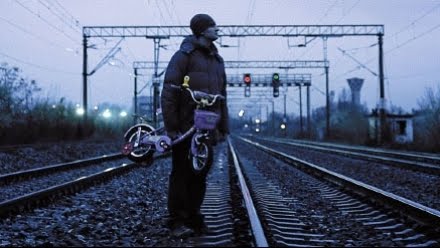

20) Aurora (Cristi Puiu)
What is this man up to?


21) Carlos (Oliver Assayas)
Gangster or freedom-fighter? You decide...


22) My Dog Tulip (Paul and Sandra Fierlinger)
The best animated film of 2010, about a subject that needs to be plumbed more.


23) The Autobiography of Nicolae Ceausescu (Andrei Ujica)
Such opulence, and so poorly spent.


24) Marcel The Shell With Shoes On (Dean Flischer-Camp and Jenny Slate)
The most addictive film of the year: I've seen it fifty times, at least.


25) Youth in Revolt (Miguel Arteta)
Michael Cera can keep his schtick going for a while, given this and Scott Pilgrim.


26) Exit Through The Gift Shop (Banksy)
Is this a joke? God, I hope it is.


27) Certified Copy (Abbas Kierostami)
Edward Albee and Richard Licklater meet in a mash-up.


28) Dogtooth (Giorgos Lanthimos)
From Greece, what might be the most difficult, but original, film of 2010.


29) I Am Love (Luca Guadagnino)
Pure gorgiosity.


30) Toy Story 3 (Lee Unkrich)
Not as good as Part 2, but even lesser Pixar can make a year-end list.


31) You Don't Know Jack (Barry Levinson)
Al Pacino returns to form with one of his finest showings in a decade.


32) Winter's Bone (Debra Granik)
Saying hello to a new acting presence: Jennifer Lawrence.


33) Four Lions (Christopher Morris)
Didn't know terrorism could be so funny, did ya?


34) Animal Kingdom (David Michôd)
A crime family, and a loving mother.


35) Multiple Sarcasms (Brooks Branch)
A 70s-flavored character study, with stupendous acting by all.


36) Temple Grandin (Mick Jackson)
A great mind finds her place in the world.


37) Monsters (Gareth Edwards)
District 9 done right.


38) Hot Tub Time Machine (Steve Pink)
The oldsters put up a fight.


39) Splice (Vincenzo Natali)
Somewhere Mr. Cronenberg is smiling...


40) Leaves of Grass (Tim Blake Nelson)
Edward Norton delivers a terrific double-time comic performance.
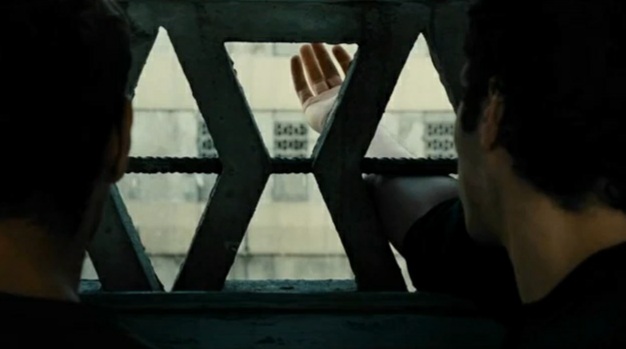

SPECIAL MENTION: A Prophet (Jacques Audiard)
Seen by most in 2010, this would be near the top of the list if I hadn't seen it last year. One of the greatest gangster/prison pictures ever made.


MOST OVERRATED MOVIE OF THE YEAR: 127 Hours
WORST MOVIE I SAW THIS YEAR: Year One
WORST STUDIO FILM I DIDN'T SEE IN 2010: Alice in Wonderland
WORST INDIE FILM I DIDN'T SEE IN 2010: The Human Centipede

More individual awards to be seen at the turn of the year. 2011 is gonna rock. Best year ever. And I hope you agree. Have a happy one--glad to be back, myself.

NYFF Review #3: Uncle Boonmee Who Can Recall His Past Lives

Until now, I had never seen an Apichatpong Weerasethakul movie on the big screen. In fact, I'd been holding off altogether on seeing one of Joe's movies (Weerasethakul prefers to be called "Joe" and I was thrilled when I heard a NYFF staff member call to him as such). But why had I abstained from his work? Well, the maker of two of the last decade's most reverentially loved movies Syndromes and a Century and Tropical Malady was, I had heard, a filmmaking giant. And, fittingly, I wanted my first experience with him to be in the theater, in the darkness and with those high ceilings. Man, did I get what I wanted.

On the second day of my dive into the NYFF experience, I caught the East Coast premiere of Weerasethakul's Palme D' Or-winning film Uncle Boonmee Who Can Recall His Past Lives. At 9 am, and harried after a crazy subway trip from Brooklyn to the Upper West Side of Manhattan, and Lincoln Center's Walter Reade Theater, I think I took my seat with my lips pursed. Okay, genius. Impress me.

I held off giving over to Weerasethakul longer than I'd like to admit. I stubbornly thought not much of the gorgeous opening shot: an ox tethered by rope to a tree, with an elegant plume of smoke before him in the deep blue night. SPOILER ALERT: the ox breaks away, and escapes into the jungle. After a ranch hand leads the beast back to its post, Weersethakul cuts away to his film's most memorable image:

(this is an internet find, and though I darkened it, it's still not the image, in all its blues and greens and reds, that I recall from the film)

I did not expect this movie to worm its way into my dreams. I expect this of no movie, and as far as I can remember, no movie has ever achieved this status, at least not so soon after I'd first seen it. But Uncle Boonmee staked claim to at least one of my recent nights. And, upon awakening, I'm embarrassed to say I woke up practicing my pronunciation of a name I once found impossible: Weerasethakul.

I think it was that last freakin' scene. It goes over into another dimension, and I was then won over, totally--like IN LOVE won over. Nevermind the fact that, before, there was an unbelievable sojourn down into the depths of the earth, with the stars of the sky in evidence, and life in the smallest pond, too; forget that there was a princess adorned, and that blue-green Apocalypse Now forest; forget that there was the taste of tamarind-flavored honey, and please don't mention that spirit that appears--WHOA!-- before the eyes, at the dinner table, like the greatest special effect ever performed. (Really, it stunned me, like it does the characters onscreen, and the scene made me think Weerasethakul was a bonafide magician.)

Anyway, in my dream, I was skiing down a snowy slope with Joe Weerasethakul, and I only remember that it was night, and we hardly talked, even at the bottom of the hill. And then I remember seeing the LCD red eyes of the Monkey Ghosts, and I knew then I was in my bed, hardly asleep. I barely recall waking up, and here it is Uncle Boonmee can recall his past lives: maybe as an ox that broke away from the farm, or as an amorous fish, or as a healthy young man that killed Communists, and insects, for his country.

Hearing Joe talk after the movie, during the festival's Q&A, I learned there's much in Uncle Boonmee that's special to him, special to his culture. That stuff is alien to a Georgia boy like me. But that doesn't keep Uncle Boonmee from penetrating my subconscious, with its killer droning, chirping soundtrack lulling us into meditative territory. What, you might ask, is this phantasmagoric picture about? I might happily ask you the same thing after hearing you've seen it, while holding my own theories close to my chest. Ultimately, I'll now only say that Uncle Boonmee deals primarily with the glory of its own vision.

PS: I saw a friend talking to Joe, alone, after the movie. I wanted to join in, but I couldn't think of anything to say, so I let the opportunity go by the wayside. What does one say to a poet?

Friday, October 8, 2010

NYFF Review #2: The Autobiography of Nicolae CeauÅŸescu

In covering the NY Film Festival, I just couldn't do a review a day. Much less two reviews. This is not how I roll.

So I've decided to review the 2010 New York Film Festival as such:

My first day, I wandered into the Walter Reade Theater, not knowing what to expect. I'm seriously hurting for money, so my therapist thought I should come equipped with cards and resumes. But I've arrived with neither, and don't expect to be passing out either during my time here. It's just too weird, to be searching for a job in a place where people expect you to have one. So I keep to myself. The others here at the festival, they seem like they are of another Earth. And they don't bother getting to know me, so I'm safe.

And, in this spirit, my first film of the the 2010 NYFF is called The Autobiography of Nicolae CeauÅŸescu. I went in knowing only a few things about CeauÅŸescu: (1) he was the "dictator" of Romania from 1964 to 1989; (2) he squandered the country's money on a ridiculous, ego-boosting building project; (3) he and his wife, looking like your unsuspecting grandparents, were executed by his one-time public upon the fall of Communism.

Given this, The Autobiography of Nicolae CeauÅŸescu strikes me as a film about evil not knowing that it's evil. At least media-wise, CeauÅŸescu was forward-thinking: he made sure his filmmaking team was running at least an hour of every day he was in power. On many days, they were powered up five times that. But they were only recording that which he demanded they record. As a result, filmmaker Andrei Ujica has at his disposal, in the construction of this remarkable movie, thousands of hours of footage to pick through. Via choice and circumstance, he narrowed his overlook down to 240 hours of footage (all keenly shot, even including CeauÅŸescu's private hunting expeditions). From Ujica's notating eye, we get this portrait of a man who didn't bother to notice his steady slide into darkness.

The black-and-white footage, from behind the Comintern, shows CeauÅŸescu thinking he's doing a good thing for his people. He's freeing them from bondage. And, most importantly, he's making sure they are fed. From here, he goes on a road trip, on a tour through markets, sampling the breads and the meats available now to the Romanians. And, yeah, see how great I am? You can buy and eat this shit! (That is, until things got really bad, and the loaves of bread and the sides of meat were made of plastic, all for the camera to capture.)

But, later, when color bleeds into the scene, politics get into the mix. And after he visits China, and Mao, you start to notice a lot more portraits of CeauÅŸescu plastered up all over the place. Always a bad sign. Political rule #1: If you need to put your mug all over your country, then you're a dictator.

One of the biggest laughs I got at the 2010 NYFF was the phony-fied image of a Romanian parade, circa 1970 or so, highlighting the Romanian athletes soon to be displaying their wares at the Olympics. In this parade: a moving boxing ring, a moving volleyball court, each inching their way down the parade route. Ridiculous. Outlandish. One of the best laughs I've gotten from 2010 movies came from The Autobiography of Nicolae CeauÅŸescu.

Andrei Ujica, who's done two other films about CeauÅŸescu (CHOW-chess-cue, as I learned) before this one, has some feeling for his subject. The elderly CeauÅŸescu and his wife, Elena, are seen at the beginning and the end, mama and papa, basically pleading for their lives. And though we don't see their deaths (no one did; they occurred so quickly that even cameras couldn't capture them), we can feel the filmmakers' sideways remorse at their speedy trial (though he knows they're just, especially after the dictator ordered his armies to fire upon his protesting people). Interestingly, though, the film seems to be slightly as much an apologia as a damnation. Those of us not in the know--those of us not Romanian--have no idea, from only this film, why the man and his wife were dispatched so ignominiously. But we can get a good notion from the pointless 80-foot-high ceilinged palaces built on countless acres of land while regular Romanians were lucky to find a crust of bread. But, still, is justice done?

And is this an "autobiography?" Not a minute of this footage--and there's three hours of it here--failed being rubber stamped by the CeauÅŸescu camp (and this includes his meeting with Richard Nixon and Jimmy Carter, too). So maybe this is a filmed memoir. Yeah, the Romanian president didn't have the final cut, but The Autobiography of Nicolae CeauÅŸescu is the truest kind of document: one that's been, by image only, given the okay, and with all good things included, by its maker, and almost all good things included by the editor (the film nearly approaches travelogue territory). The only problem is, though he was surrounded by luxury, one extravagance this film's cherished and dirtied subject never could afford was the will to suss out who he was, really, in the larger scheme of the world. And I'm certain all the filming failed to help.